
- Follow-up with my MP: Online anonymity and biometric age verification
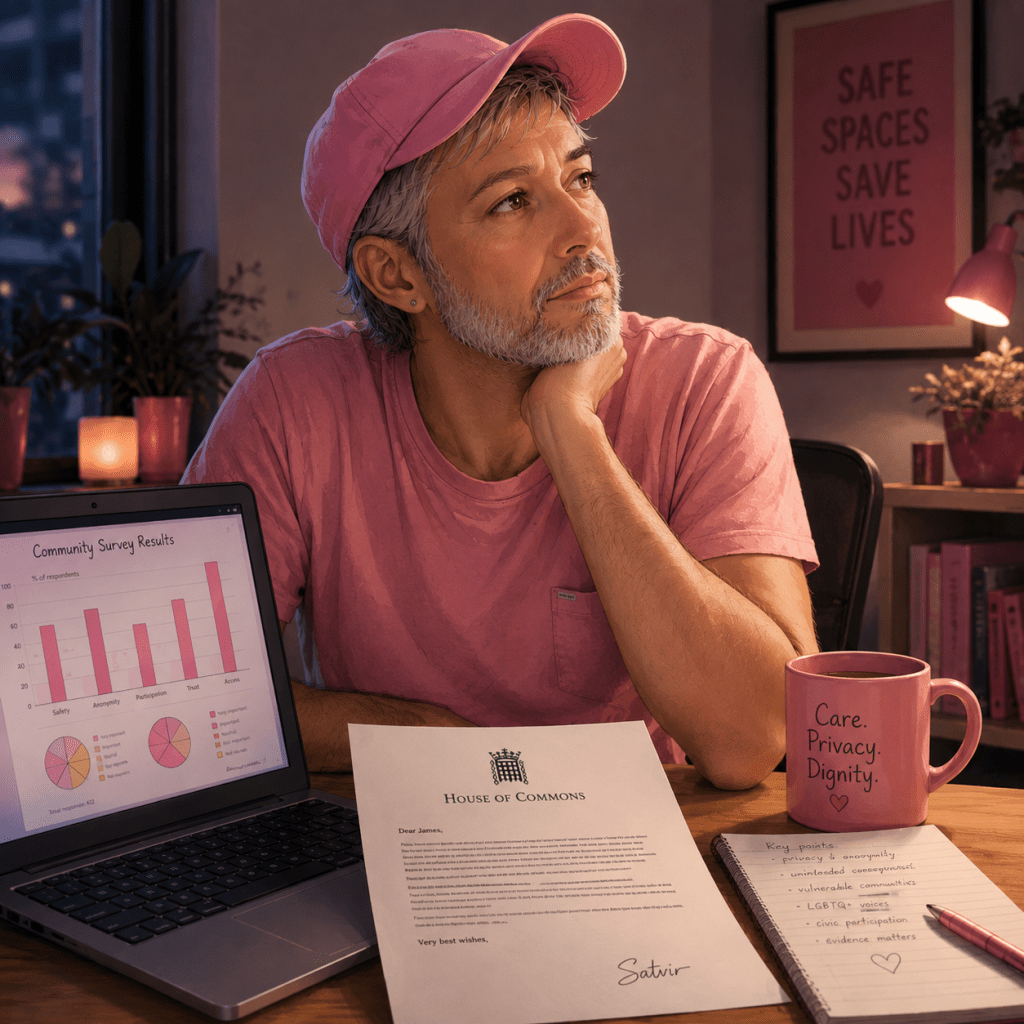
I heard back from my MP on the issues I raised on the back of our community questionnaire regarding the effects of requiring biometric age verification for online spaces (the original post is here: Letter to MP: Follow-up: Online anonymity and biometric age verification):
Subject: Re: Concerns about biometric age verification and online anonymity (Case Ref: SK8928)
Dear James,
I hope you are very well and thank you for your email, for sharing your research with me, and I am sorry that your email was initally missed.
I found the survey findings very interesting and appreciate you taking the time to gather perspectives from people directly affected by these changes. I recognise the concerns you raise around privacy, anonymity and the potential unintended impacts that identity verification measures could have on vulnerable groups, including LGBTQ+ communities.
If you are happy with it, I can pass these findings on to the Department for Science, Innovation and Technology on your behalf so that your concerns and the experiences shared through your research can be considered.
Thank you again for getting in touch and for sharing this work.
Very best wishes,
Satvir
Overall, I think that this is a reasonably positive response. Compared with some responses I have received from MPs in the past, this felt thoughtful and constructive – notably a Conservative MP in Bristol when I used to live there simply wrote back with words that equated to “your views are not important to me”.
She hasn’t made any firm commitments, but neither did she say:
- “nothing we can do”
- “government policy is settled”
- “online safety must come first”
- “identity verification is necessary”
Instead she stayed open and constructive.
So I’d like to reflect a little on the start made with our community questionnaire – together we have created:
- grassroots evidence
- from a marginalised community
- about unintended policy consequences
- and got it into a Parliamentary channel
That’s real civic participation!
Most people never get beyond shouting into social media.
I replied:
Dear Satvir,
Thank you very much for your reply, and for your kind words about the survey work.
Yes, I would be very happy for you to pass the findings on to the Department for Science, Innovation and Technology.
My main hope is simply that the perspectives of people who rely on anonymity for safety and participation are considered carefully as policy develops.
Thank you again for your continued engagement with these issues.
With best wishes,
James

Subscribe



 Eunuchorn