
- The Eunuch by Terence (play produced 161BC)
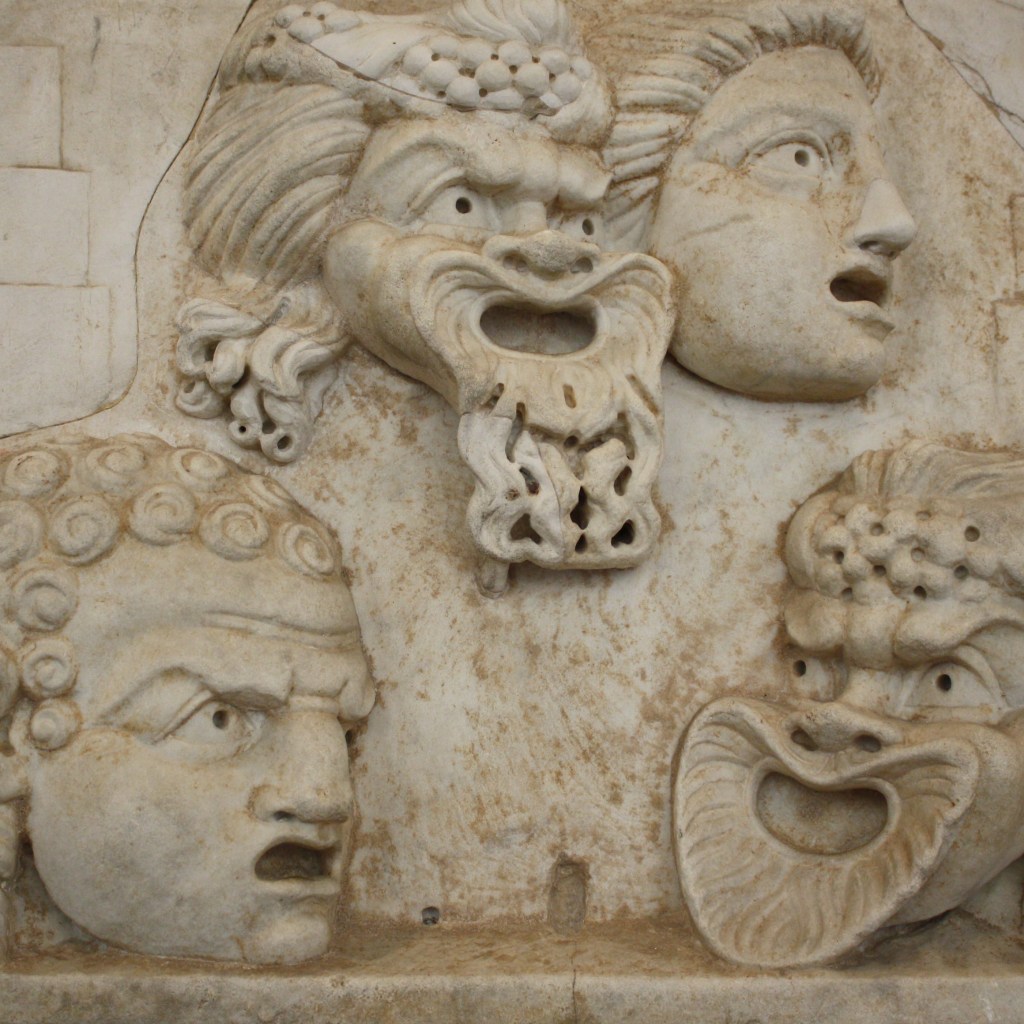
I like my literature to be quotable and laced with things to make me think. I’d encountered the play by Terence in a chat in the eunuchsphere and thought I should research it. The play is a Roman comedy from the Republic, based on a Greek play by a fellow called Menander. Menander’s play only exists as fragments now.
I’d been attracted to Terence’s play because I’d heard that the eunuch character had been treated in a more human light than was usual for the time.
It started with a promising, if little cynical:
Nothing in fact is ever said which has not been said before
Author’s introduction to the playIn the play, a eunuch is bought as a gift for a girlfriend (more on her later – she’s a courtesan) – much like one might give a novelty piece of tech to a friend. However, somebody impersonates the eunuch in order to gain access to a particularly attractive girl in the courtesan’s household – dressed “suitably for a eunuch”, leaving me wondering whether there was some sort of uniform for the castrated in the ancient world.
He rapes her: “Was I to lose the chance offered me, an opportunity so brief, so unexpected and so much desired? My god, if I had, I should really have been what I pretended.” And then runs away to hide, and the real eunuch gets given a rough time of it.
People thought that eunuchs were supposed to be safe guardians (“I’ve always been told that their sort falls heavily for women, but they’re incapable”), but seemed happy to ditch that knowledge when a freeborn commits a crime and there’s a slave to cop for it.
The actual eunuch is given a very unpromising description (“horrible individual, that old woman of a man”). He appears only briefly, yet he is described as intelligent and learned. What we see instead is a man trapped in an impossible situation: he knows he will be tortured whether he tells the truth or not.
Incidentally, castration was the punishment for adulterers in Roman and Greek law – Its implied that the chap who assaulted the girl was at risk of becoming the very thing he impersonated as punishment for violating a freeborn woman.
I mentioned the courtesan, she is definitely treated differently from the conventional depiction of a prostitute in ancient literature: she is presented as a sweet lady.
I am not used to reading plays – its hard going. Even when I was at uni studying ancient history I saw several plays, but I never read a play.
I don’t know what conclusion to draw from reading this on its own: difficult is the word I’ll use! It was Terence’s most popular play in antiquity, but without the performance it is like reading a comedian’s notes and trying to imagine what the joked actually were.





Subscribe



 Eunuchorn