
I Didn’t Learn Love the Way Other People Did
I knew from an early age that my household wasn’t normal, but as a child finding the words that could label that difference between my home and those around me wasn’t easy. I could see other boys’ fathers were more expressive, calling their sons “mate” and showing an interest in what they boys were into at the time.
It was only as I grew up that I realised that the way alcohol was consumed wasn’t normal. And neither was the way emotions were expressed – or left unexpressed.
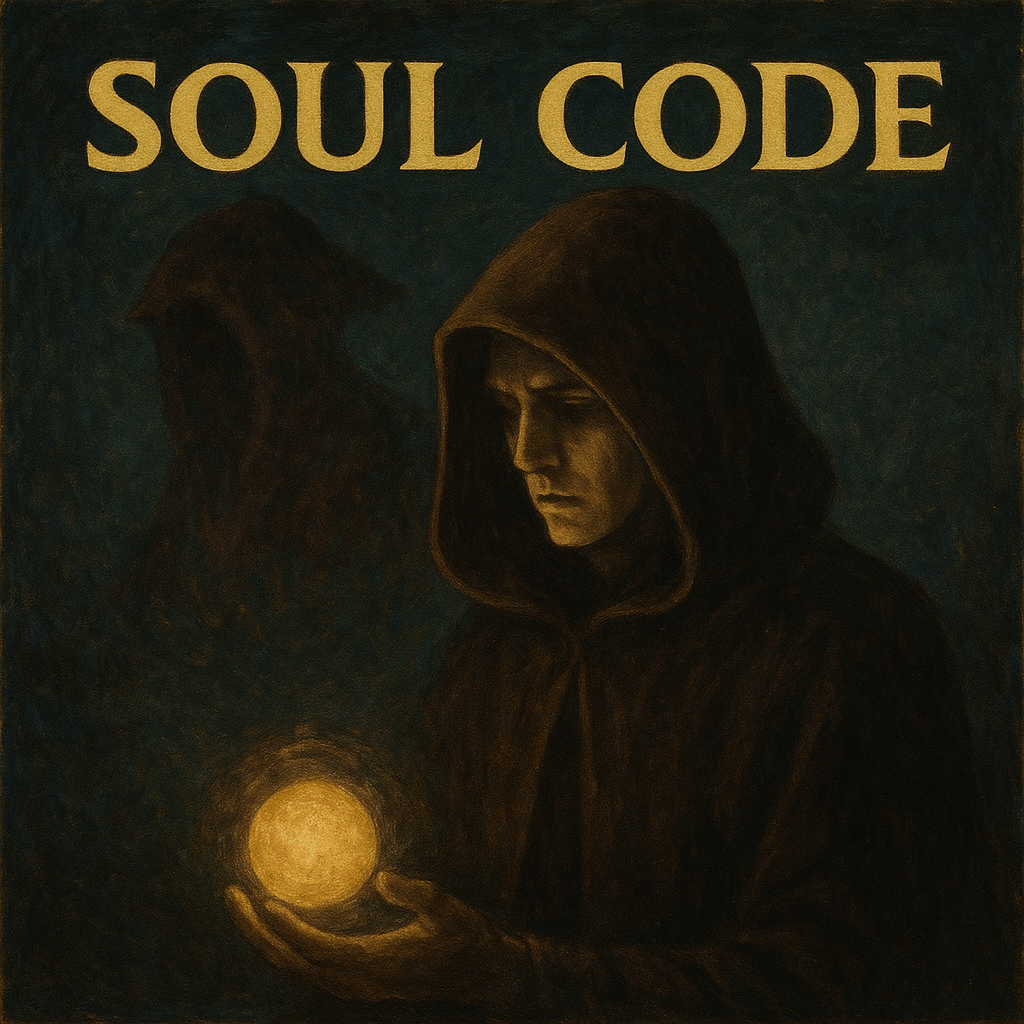
Neither love nor anger were expressed fully or clearly in my family home, what effect that had on me though is the subject of these posts on Soul Code …
Dad – Love in a Low Voice
As an adult I have come to understand that the way my father expressed love was more in line with how many autistic people demonstrate it: by sharing the things he loved with me – modelling, nature, and fishing. I can see that he was trying to show me he loved me in a very real way, but I was too young to understand – and he would get impatient and I would become the victim of his irritation and anger, which sometimes would cause him to lash out.
My childish brain couldn’t reconcile his anger and the way he showed affection, and instead I was drawn to the safe quiet reassurance of my mum and nan.
I rarely had to face my mum’s wrath: I’m afraid that she actually took advantage of my father’s more authoritarian methods and used him to mete out punishment – adding to the burden of the effects of his own own anger.
I do not remember ever hearing him say “I love you” as a child. I only heard that as a much older adult: I am fifty-one now – he has only started saying it in the five years since mum died. I only discovered that he was proud of me from friends whom he had spoken to about my getting a place at Uni and my eventual graduation.
If he had warmth towards me, that never reached me when I was young.
And there is a world of difference between being loved and feeling loved.
I adapted and became quite self-sufficient.
Brother – The Parallel Play Bond
I didn’t connect with my brother as a baby. One day I was an only child, the next I had a little brother. I don’t recall being encouraged to feel anything about this impending competitor for my mother’s time (her affections she never left in doubt).
When he was born, I was kept away from him. I was too young anyway I guess – there are five-and-a-half years between us: too much time for us ever to have much in common.
Of course, he grew up in the same environment as myself – our dad even tried to engage him in his special interests – once again at an age when my brother was probably too young to appreciate them.
Whereas I became self-sufficient and good in my own company, playing for hours on my own, my brother struggled to get the attention he needed and was seen as a “problem child”. He found some peace in drink and drugs. These days he would be more easily diagnosed as being neurodivergent.
Our mother was as warm and loving towards him as she was towards me.
It wasn’t until we were much older that we started to connect. He had to stop drinking first though.
When our mother died we did form a close kind of connection – we have to be a little to each other of what our mum was to us.
We have also learned to connect through our neurodivergence – finding a thread in common in it and its impact on our lives.
Mum – The Emotional Counterpoint
Mum was the complete opposite of my dad: she was friendly, approachable, warm, empathic, and safe. She wasn’t willing (or able?) to spend time playing with us, but she created that calm safety that my brother and I needed. I think that might have been because she was an only child.
Mum told me a story about her days courting my father. She described my dad as a good friend before they married, then almost as soon as the ink on the registry had dried, he went cold on her. When asked why, my dad said that “husband and wife couldn’t be friends”. And that ended her dreams of marital bliss.
Many years later, after my brother and I had grown to adulthood, they seemed to form a bond of friendship – and at her funeral dad played some tune about friendship (“You’re My Best Friend” by Don Williams). That was a choker!
She had many friends, some she would see most days, some a few times a month, others she might not see from year to year. Her ability to connect she shared with her own mother (my nan), who would ask strangers questions that could make your toes curl in a “you can’t ask that!” sort of way – except she asked her questions with a kind curiosity aimed to educate herself.
So I grew up with two emotional languages in one house.
My mum’s warmth is where my natural style of expressing love comes from.
Her emotional loneliness is something I recognised – as a child I was her friend.
The Blueprint – Learning to Guess What Love Means
So, in adapting to the situation at home I learned to read tiny cues and became hyper-attuned to micro-signals, absorbing warmth and silence at the same time. But I have only just learned that love can be present but unspoken.
From that childhood environment, I started tolerating emotional scarcity, I craved clarity but I had to learn to survive without it. And I learnt to be hyper-vigilant to monitor the moods of others, looking out for changes in the emotional weather, but hampered by an inability to distinguish between certain types of emotion – for example feeling anger, aggression, and assertiveness as the same thing.
And my longing became just background static in my life.
The Moment Behind the Eyes
I seemed to live without the need of love from my dad – he became irrelevant to me for much of my adult life. But the need didn’t just go away, and when I heard him start to express his emotions and his love for me I felt tears behind my eyes.
I realised that he did love me and he did care about me – I understand his language of sharing the things he loves because that is one of the ways that I express love for somebody: by sharing things that matter to me – and it physically hurts when that love isn’t understood.
However, I also speak my mother’s language of love – the verbal, demonstrative affection that is more commonly understood expression of love.
I need both of these modes understood and accepted and reciprocated.
Last bit…
I built a marriage around being the only one expressing love in that demonstrative way – and even though my husband needed to receive love in that way, he was unable to express it. Neither could he understand that my desire to share things that interested me with him was also an expression of love.
His ay of expressing love was different again form the two models I had experienced as a child, although closer to my dad’s model.
My marriage was a confused mis-firing of communication styles and the way love was communicated between us left us both feeling unfulfilled.
This felt familiar and was our normal, but I have come to learn that this isn’t everybody’s normal, and that’s what these posts are about…

 Eunuchorn
Leave a reply to Soul Code – Episode 2: Growing Around the Absence – Eunuchorn Cancel reply