
Introduction
This is the second post in a series leading up to International Eunuch Day on March 24th. In the last post, I explored the Dies Sanguinis, an ancient Roman festival where devotees of the goddess Cybele voluntarily castrated themselves in an act of religious transformation. But the history of eunuchs stretches far beyond Rome. Across different cultures and time periods, eunuchs have held roles of power, influence, and spiritual significance – sometimes revered, sometimes reviled, but always present.
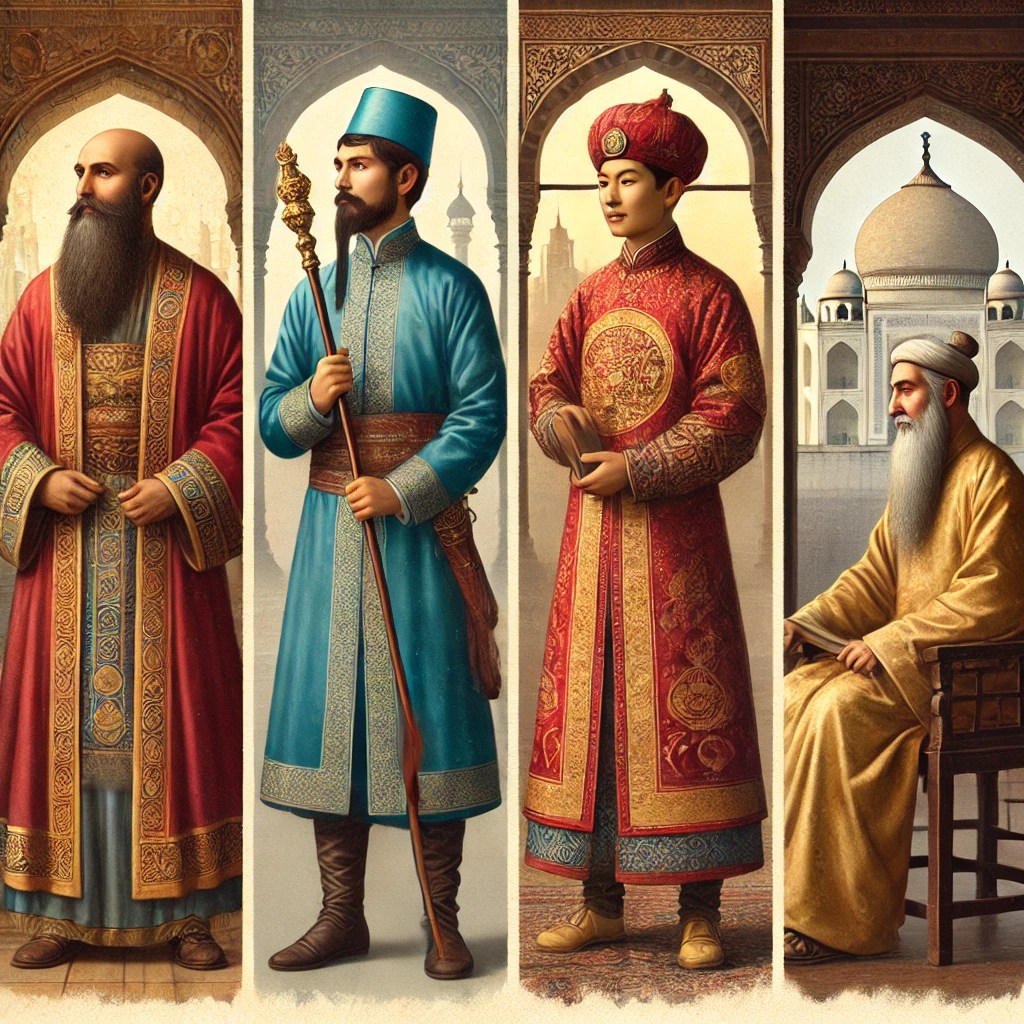
While the word eunuch often conjures images of servitude or forced castration, history tells a more complex story. In many societies, eunuchs were not simply passive figures but key players in religion, politics, and empire-building. Their unique position – set apart from traditional gender and familial structures – often granted them opportunities unavailable to others. Let’s explore some of the most prominent examples.
Imperial China: Bureaucrats and Powerbrokers
In China, eunuchs served at the heart of imperial administration for over a thousand years. They were often castrated in childhood – either as a punishment, an economic necessity, or a means of social advancement. Many rose to immense power, particularly during the Ming dynasty (1368–1644), when eunuchs controlled vast bureaucratic networks.
One of the most famous was Zheng He, a 15th-century admiral who led China’s great naval expeditions, commanding fleets that reached as far as Africa and the Middle East. His career exemplifies how eunuchs could become trusted advisors, military leaders, and political powerhouses.
However, their influence was also deeply controversial. Some emperors relied heavily on eunuchs, while others saw them as a corrupting force. Dynastic histories often depict them as manipulative schemers, though this may be more reflective of Confucian scholars’ biases than historical reality. Regardless, their presence in Chinese history is undeniable.
Byzantine Empire: Political Players and Generals
Eunuchs played a crucial role in the Byzantine Empire, particularly within the imperial court and church. Unlike in China, where castration was often imposed, Byzantine eunuchs were sometimes voluntary castrati – men who chose this path for career advancement.
They served as high-ranking officials, diplomats, and even military commanders. The logic was simple: because eunuchs could not establish dynasties of their own, they were seen as less of a threat to ruling families. This made them ideal advisers and powerbrokers.
One of the most notable Byzantine eunuchs was Narses, a 6th-century general who led military campaigns against the Ostrogoths. Despite his lack of traditional masculinity, he proved himself as a brilliant strategist, defeating enemy forces and securing victories for the empire. His story challenges the idea that eunuchs were weak or passive – he was a warrior in every sense of the word.
The Ottoman Empire: Guardians and Kingmakers
The Ottoman court was structured around a strict racial and hierarchical division of labour, and eunuchs were no exception. The two main groups – Black eunuchs and White eunuchs – held different roles and levels of influence.
Black eunuchs, primarily enslaved men from Africa, were placed in charge of the imperial harem and religious endowments. The most powerful among them was the Chief Black Eunuch (Kızlar Ağası), who acted as an intermediary between the sultan and the outside world. Despite their origins as slaves, Black eunuchs could accumulate immense power, influencing royal marriages, succession politics, and even imperial policy.
White eunuchs, usually taken from the Balkans and Caucasus, were given administrative and security roles within the palace. They oversaw the training of young pages in the Enderun (the palace school) and managed certain state affairs, but they had less direct influence over the sultan’s household.
This racial distinction was not just a matter of different duties – it also reflected deeper social and political dynamics. Black eunuchs, though technically of lower rank, often had closer access to the sultan and his family, giving them an outsized role in shaping Ottoman politics. Meanwhile, White eunuchs, despite their administrative importance, had fewer opportunities to wield personal influence.
India and the Hijra Community
While not all hijras are eunuchs, the hijra community in South Asia has long included individuals who have undergone castration as part of their gender expression. Hijras occupy a unique space in Indian society, historically serving as spiritual figures, performers, and advisors. Some held respected positions in royal courts, while others lived on society’s margins.
Under British colonial rule, hijras were criminalised, and their traditional roles were disrupted. Today, they continue to face discrimination, but legal recognition of a third gender in India, Pakistan, and Bangladesh has brought renewed visibility to their community.
Reflections on Eunuchs in History
Across different cultures, eunuchs have played diverse and powerful roles – as generals, priests, bureaucrats, and guardians of rulers. While their existence was often shaped by systems of control, many carved out spaces of authority and influence. They were not merely victims of their circumstances but active participants in shaping the societies around them.
As we approach International Eunuch Day, it’s worth reflecting on these histories. The presence of eunuchs in different cultures challenges rigid ideas about gender and power, showing that identity has always been more fluid than many assume. And while the world has changed, the stories of these figures remind us that those who live outside traditional norms have always found ways to exist, to influence, and to thrive.

 Eunuchorn
Leave a reply to Medical and Voluntary Eunuchs – Eunuchorn Cancel reply