
First encounters
This is the first in a series of posts celebrating International Eunuch Day, which falls on the 24th March this year.
I first encountered the words eunuch and castration while studying Ancient History at university. Those words resonated so deeply as I finally found the words to describe what I needed to feel whole in my body.. It feels fitting, then, to begin this series by exploring the very history that first gave me the words for my own identity.
March 24th is International Eunuch Day, a day that – whether by coincidence or design – aligns with an ancient Roman festival known as Dies Sanguinis, or the Day of Blood. This was a day of ritual self-castration, performed in devotion to the goddess Cybele. Her followers, the Galli, transformed themselves in an act of sacrifice, devotion, and rebirth. It is one of the earliest recorded instances of voluntary castration, and though the world has changed, its echoes can still be felt today.
The Festival of Cybele and Attis
The goddess Cybele was a powerful and complex deity. Originally worshipped in Phrygia (modern-day Turkey), she was known as the Great Mother, a force of nature embodying fertility, chaos, and wild, untamed energy. When her cult was adopted into Rome in the 3rd century BCE, it brought with it the tragic myth of Attis – her beloved consort.
According to legend, Attis was driven to madness and self-castration before dying beneath a pine tree. In grief, Cybele resurrected him, making his story one of sacrifice and renewal. This myth played out in a yearly festival, culminating in Dies Sanguinis, when the most devoted worshippers of Cybele – known as the Galli – re-enacted Attis’ sacrifice upon themselves.
The Galli: Sacred and Marginalised
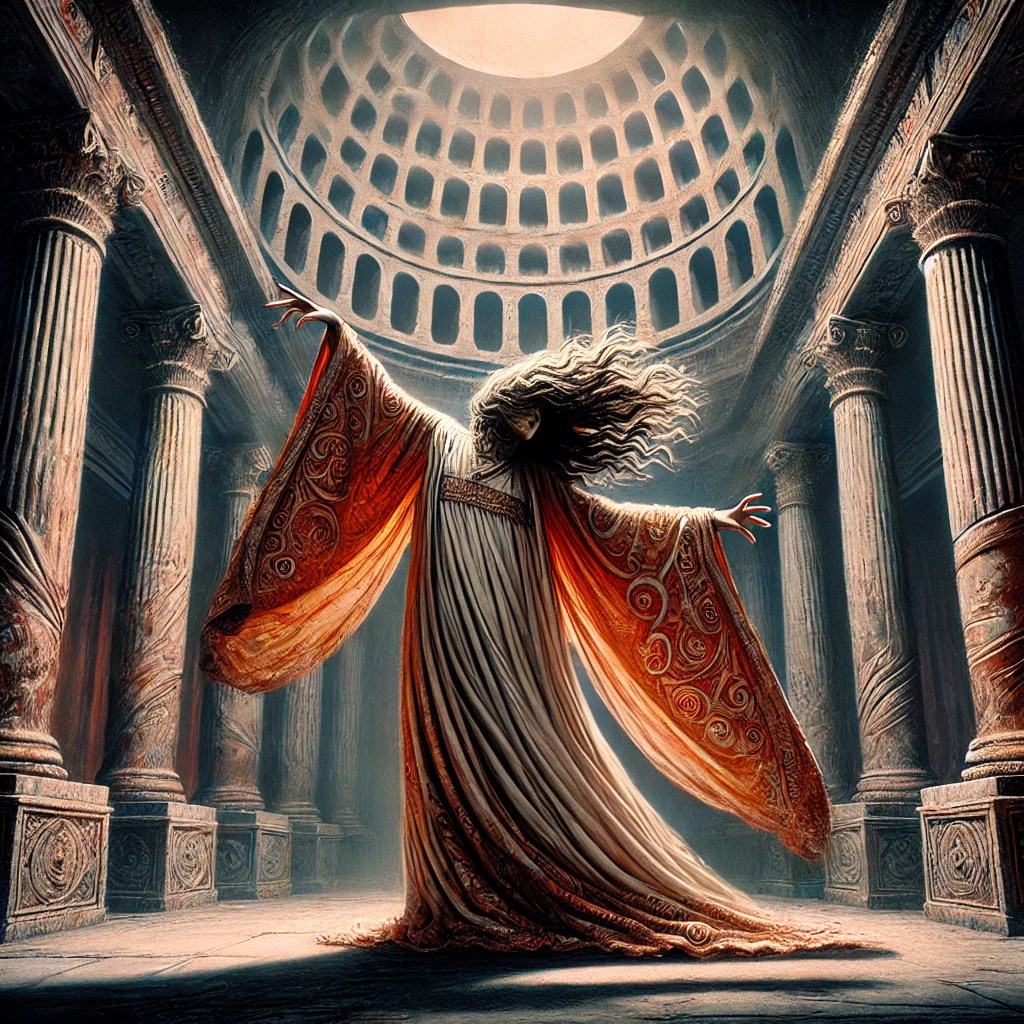
The Galli were Cybele’s priests, and their initiation was both brutal and transformative. On Dies Sanguinis, in a frenzy of music and religious ecstasy, they would castrate themselves, offering their severed flesh to the goddess. It was an act of devotion, but also one of identity – by severing their manhood, they stepped outside Roman concepts of masculinity and became something else entirely.
To the Romans, they were both sacred and unsettling. Roman masculinity was built on power, dominance, and control, and the voluntary renunciation of that power was deeply alien. The Galli lived on the margins of society – seen as priests, prophets, and mystics, but also as figures of suspicion. Some Romans revered them; others ridiculed them. Their existence challenged rigid gender roles long before such language existed.
Eunuchs Across the Ancient World
The Galli were far from the only eunuchs in antiquity. Across different cultures, eunuchs played vital roles – as religious devotees, royal advisors, and guardians of harems. In some societies, castration was imposed as a mark of servitude; in others, it was chosen as a path to power or enlightenment.
What set the Galli apart was the voluntary nature of their transformation. Their castration was not forced upon them – it was a choice, an initiation, a way of stepping into a new identity. And while their world was vastly different from our own, there is something deeply resonant in that act of choosing, of reshaping oneself according to an inner truth.
A Personal Reflection
Looking back, I realise how significant it was for me to discover the words eunuch and castration in the context of history. I wasn’t reading medical texts or modern discussions – I was studying Ancient Rome, encountering figures who had, in their own ways, stepped outside traditional expectations of gender and power.
For the Galli, castration was a sacred act, a transformation that brought them closer to the divine. For me, encountering these histories was its own kind of transformation – the beginning of a journey toward understanding myself. While the world has changed, the act of naming and claiming an identity remains just as profound.
As we approach International Eunuch Day, it’s worth remembering that eunuchs have always been part of human history – not as footnotes, but as figures who shaped religion, politics, and culture. And just as the Galli carved out a space for themselves in a rigidly structured world, so too do modern eunuchs carve out their own space – seeking visibility, recognition, and understanding.

 Eunuchorn
Leave a reply to Medical and Voluntary Eunuchs – Eunuchorn Cancel reply