
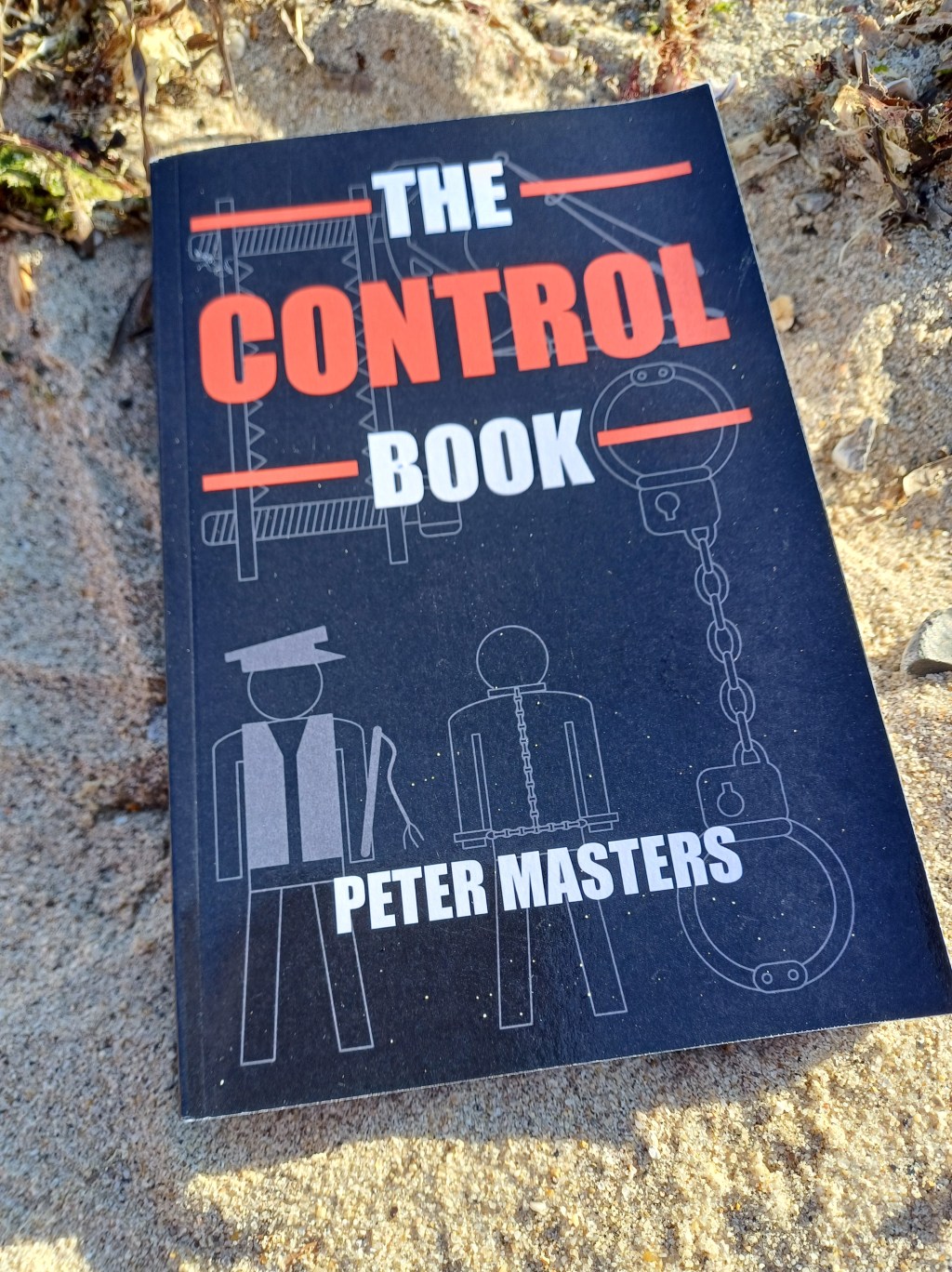
A friend suggested that I read this book several months ago. He always suggests interesting books that stretch my mind in new directions – and he salaries had a purpose, having a “sacerdotal masculinity” as a strong part of his identity (that’s how he describes himself).
I do love a book that will make me think!
So, the big question for me to answer here is “Why was it suggested that I read this book?”
There’s only one way to find out …
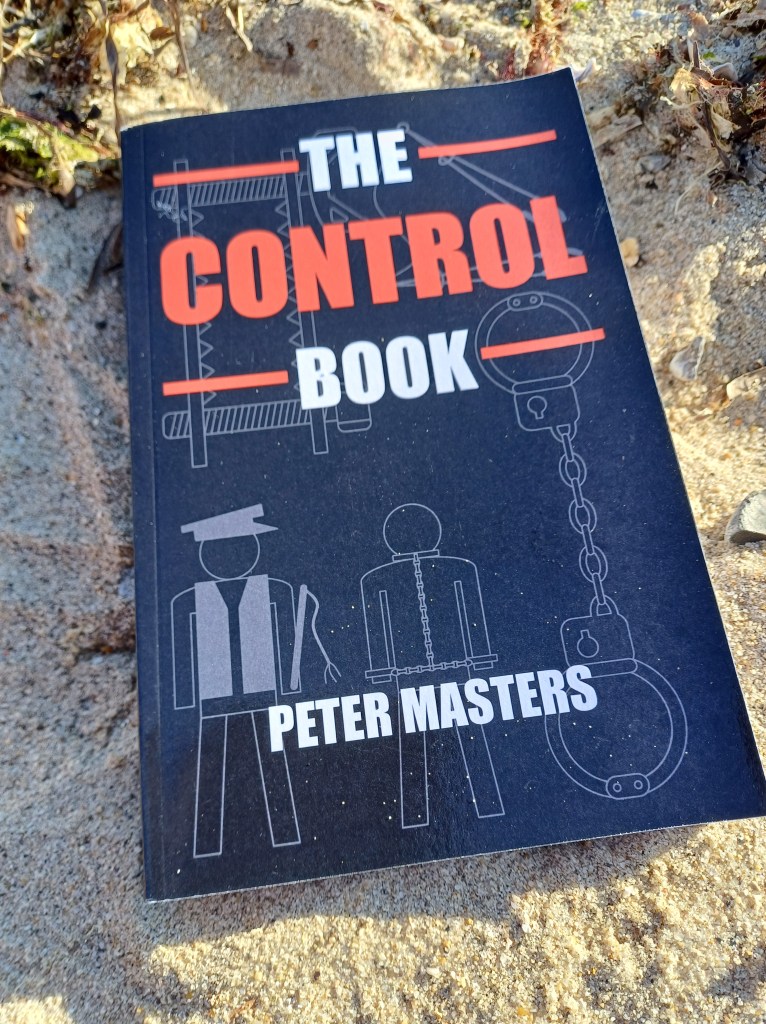
… part in the challenge of life comes from understanding and dealing with demanding and unusual situations. Regardless of whether you are looking for challenges or not, it’s certain that the less understanding you have, the more you are confined to standard solutions, and the less you are able to deal with non-standard solutions.
Page 5
It seems that I have never fully understood myself; I have never been able to be completely honest with myself – the result is, that so far, I have made errors that have blocked me from experiencing life in life’s terms, and instead fought it and myself. I think that if you fight yourself, then you are going to lose.
In my ignorance of myself, I have damaged people that are closest to me – my husband in particular – I have added to his traumas, and I think there may be further answers in this book as to how I have done that … but also how he has damaged me perhaps?
[of the unconscious] they were things that we experienced in some way – but, for some reason – be it because they were too shocking, frightening, embarrassing, or humiliating – we “allowed” them to be forgotten. The only difficulty with this is, that nothing can be completely forgotten.
Page 13
From my earliest date I knew that I was different. I gradually had a creeping awareness that I was gay – the bullies at school knew that before I did – at least they decided that was a key attribute to torment me with.
It wasn’t until I was twenty-one and in my final year at university that my homosexuality forced me to accept it and I began to explore it – but in quite a cautious way I feel from the distance of nearly thirty years later.
There were things I could not face yet that were within me. I could not face my gender dysphoria, and neither could I face my kinky side. Both of these things terrified me. Indeed, when somebody offered to fist me, I ran a mile … and I’ll admit now that I was curious at the time! (And I retain a curiosity).
These disavowed parts of myself would later come to test my life apart.
… some predispositions [the author referenced “warrior” and “mother”] are typically associated with one gender, that doesn’t mean they don’t exist in the opposite gender.
Page 18
I was pleased to read this, as I was afraid that this book was going to prove a challenging read (I am sensitive to sexism and gender assumptions/bias). At least the author here recognised that what he perceived as a prevalence wasn’t an absolute rule.
Speaking rationally and logically to somebody in the grip on unconscious fear is not going to make a lot of difference.
Page 20
I’m minded of the autistic girl that I witnessed having a very public meltdown as her senses overwhelmed her – her friends tried to reassure her and reason with her: she was unable to respond to anything rational at that time and needed a more primal remedy … as well as for everybody to just shut up and bugger off and let her with herself.
I recognise the same in my own meltdowns and shutdowns: reason is not a friend to me in those moments. I need the assault that I perceive to be happening to me to end and be replaced with quiet and physical reassurance – words won’t work.
Awareness sand understanding of unconscious and subconscious archetypes, and of predispositions, give us hooks … our increased understanding of these hooks also makes it easier for us to recognise when someone is attempting to manipulate our control use via these archetypes.
Page 35
Are there things that specifically turn you off? When you’re feeling particularly dominant or submissive, are there things that pull you straight back to neutral?
Page 35
I’ve never been with somebody who identifies and fully occupies the role of “dominant”, so it is hard to say what I, as a submissive, get turned off by – I suppose it would be somebody who didn’t feel stronger than me, or didn’t feel like an authority I should obey.
What triggers a dominant “rush” in you? What fires it up? Is it sexual? Is it related to some other activity?
Page 35
If I am in a leaderless group, I’ll take charge until somebody comes along with a more natural leadership quality. I like to be active, either mentally or physically, and I cannot abide wasting time when there so many other things I can get on with. I don’t get a rush from being in charge – I get stressed.
I can take charge and dominate, however only with the energy of a puppy or a child: enthusiasm that overwhelms my mouth and actions, rather than a desire to control.
I will do the jobs that need doing – pay the bills, make the dinner, and so on. This is filling a void, but I don’t regard them as either dominating or submitting: I’m just doing what needs to be done.
There is nothing sexual in any control I assume.
If you’re submissive, what is it that triggers you? Are there images of actions which feel it for you?
Page 35
Submission does have a strong sexual component in me; I desire to be told what to do in sex, to be forced and constrained: loss of control is enormously arousing for me. I particularly like being collared as that puts me in my place!
Why is dominance and submission play often sexually arousing?
Page 45
My first thoughts are “it just is!”. That my neither honours nor answers the question.
The book refers to dominance/submission as part of the human mating ritual (my words); how does that work with a gay relationship? Was might fuck, and seven get turned on by the idea of “breeding” or being “bred”, but no matter how much we fuck, there’s not going to be any kids! In certainly get turned on by being “bred”.
Being “bred” is a submissive thing, having a dominant male use me for their pleasure and Mark me with their seed.
So taking it to a more BDSM level: I get a real kick out of constraints – where physically all power is relinquished. For me it is the most trusting I can be.
So is trust, itself, erotic?
If like you to consider what the following words mean to you:
1. Authority
2. Power
3. Control
Page 48
Authority – somebody with authority has a legitimacy. Whether they be an academic, medical, or political authority. As a society, we have decided that certain people should automatically have power and control in certain situations; that their word has more importance than other people’s. A Dom doesn’t have authority simply by assuming the title “Dom”.
Power – is the agency of action; it says nothing about legitimacy of control. A person may be physically powerful and exercise it, however they have no legitimacy, and control will be fleeting as it has not actually been transferred.
Control – when one drives well, it is said that one is in “control of the car”, and when driving badly one has “poor control”. Is control therefore a quality in a relationship? The extent to which a Dom can have another behave and feel as the Dom wishes? Control may be consensually given, it may be forcibly wrested, or it may be subliminal and manipulative.
[of a submissive taking back control] with a control sensitive submissive, them not having control is a state they and you are looking for. When they take back control, it’s putting them somewhere they don’t want to be.
Page 65
This puts me in mind of decisions that I have been forced to make in behalf of my husband. I never wanted that responsibility. I didn’t feel adequate to it.
There have been plenty of times in my life where I have wished that somebody else would have made the decisions.
The perfect example was my castration: my ideal scenario would have been some dominant (or daddy or master) to whom I was answerable, ordering me to be castrated. It would have added elements of kink into what could have otherwise have been a very sterile situation.
Of course, was it happened, it still managed to be one of the most magical times of my life.
[of times when a submissive might want to take back control] You learn about these both by observation, and by debriefing after an incident had occurred, and by encouraging and helping the submissive to communicate when they are feeling nervous or stressed, even if they don’t know why.
Page 68
In reading this book, I get a strong sense of the duty of care and responsibility that a dominant takes on.
I am certainly drawn to dominants with a caring aspect who would take a parental role in the relationship.
Being put in a situation where they need to take back control is damaging to the submissive. … knowing that taking back control is a real possibility to deal with a situation, it’s probably not where any submissive ever really wants to be.
Page 69
Normally, my marriage is (at least in principle) a partnership. We take joint responsibility for most things. When he’s ill, I need to take responsibility and control of everything. When he’s recovering, I need to return that responsibility and control. However, if I return it too soon, there is a risk of relapse, so I must take care too ensure that control is returned at the right time.
This is just too much stress for me. Is not how I’m designed.
This being forced to take control, then having to give it up again, and having to judge exactly when to do both these things has damaged me. Like a stone exposed to heat and cold and heat and cold, I crack.
So here’s me, this (largely) submissive guy, being forced into being in control.
Oh, it gets worse: my husband can sometimes resent me for taking control, or for being hesitant in returning it.
Just what I need. Resentment.
How can a dominant regain confidence of a submissive when the submissive has had to take back control due to a shortcoming in the dominant?
Page 70
It seems that central to the Dom/sub relationship is reflection, communication, and responsibility. Both parties must reflect. Both must communicate – within that, the dominant has a responsibility to ensure that the submissive feels safe to share their innermost feelings: this is something that I feel is lacking in my marriage is the safety too express my deepest thoughts and feelings. Perhaps that is another attraction of this type of relationship for me.
Recognising your submissive’s progress in some way, noticing the efforts they make to talk to you about their inner feelings, or noticing the work they do to overcome their fears and expose intimate control to you, is also important.
Page 75
Affection, touching, and kind words are strong motivators for me.
What sort of society would be ideal to allow a submissive to fully express themselves? What aspects of our current society gets in the way of this? What is there in your life which gets in the way?
Page 76
Oh the one hand, I love an egalitarian society that encourages – demands – that all members take part in and take responsibility for it’s smooth operation so that all members have the essential requirements for a healthy and happy life.
A key special interest of mine – this blog and it’s associated wiki – is created and maintained from a sense of love and duty towards my minority communities for the well-being of it’s members. I plan to have some political activity to bring our difficulties into the public awareness and be part of creating a safer world for us.
I suppose this is a sort of public service, however it’s at nobody’s behest but my own.
Yet, in my personal life, I would welcome some structure and control by a caring dominant.
[of returning control] an inexperienced submissive could find themselves in difficulty – possibly aided by overwhelming emotions.
Page 80
Not having surrendered control to a dominant, I do not know how this would feel. Overwhelming emotions can be dangerous for me, and I can experience meltdown, fleeing, or shutdown as means of dealing with emotional overwhelm. A dominant would need to be aware of this in me.
What other situations or questions can you give to a submissive, once you’ve released them, to help them consolidate their own control over themselves?
Page 81
I haven’t been the situation where I’ve either been the dominant or the submissive, however, if I think of those times in my marriage where my husband has been ill and hospitalised or in his own “dark place”, then the question gains relevance.
During those times I have de facto control over the house and to some extent him. I do not want this control and I am anxious to do away with it as soon as possible … yet I also must own a fear over handing it back too soon. If its returned too soon, then relapse is possible. I am responsible for ensuring the timing is correct. If I get it wrong, then either hospital re-admission or returning to the dangerous dark place he goes becomes a real possibility.
The best I have managed is a judged release of control – judged on appearance – for which he then feels resentful that he has been controlled and that control is returned to him as the result of a choice of another (me).
I do now know how better to handle this. As I say: I never want this control.
To be continued … https://eunuchorn.uk/2024/08/07/the-control-book-book-review-part-2/

 Eunuchorn
Leave a reply to The Control Book (book review) – Part 2 – Eunuchorn Cancel reply