
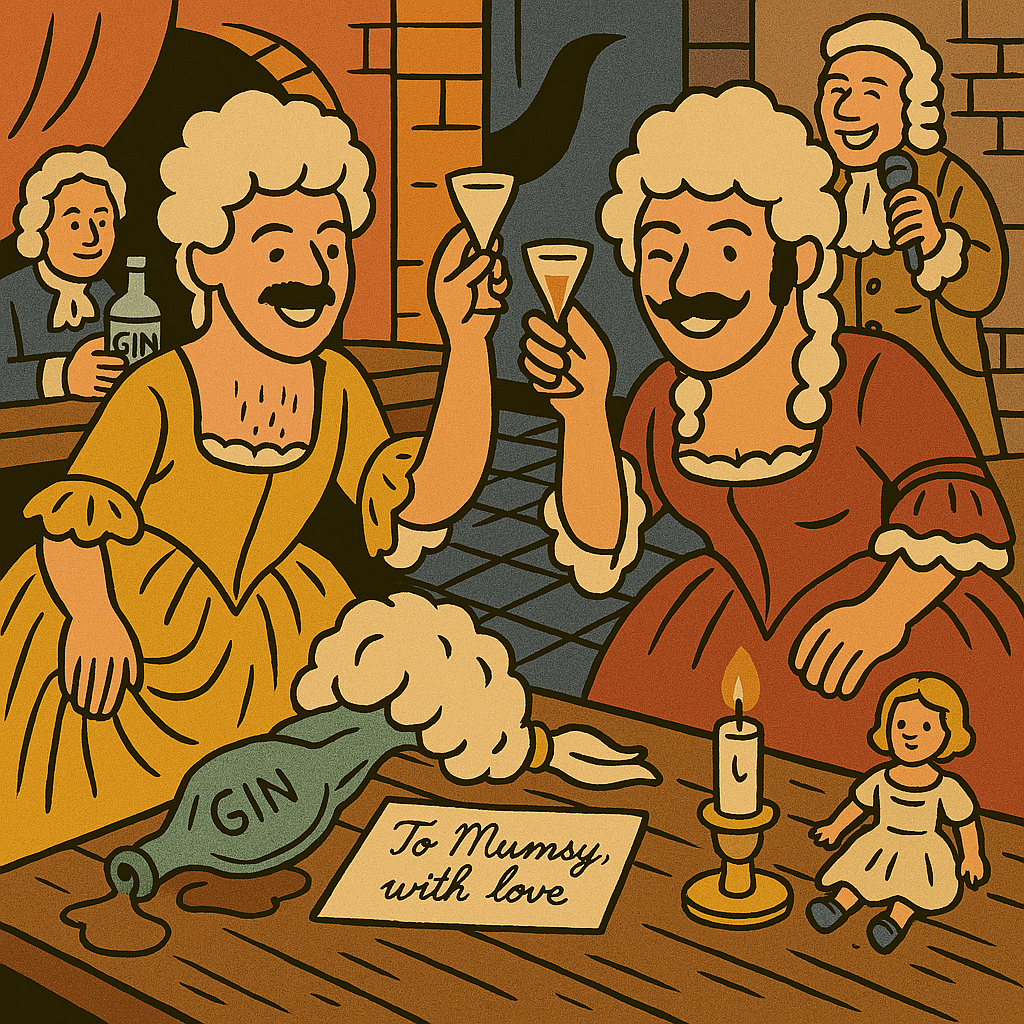
Before there were gay bars or Pride parades, there were Molly Houses. Hidden behind the drapery of 18th-century England, tucked away in taverns, coffee houses, and private rooms, these were the original queer sanctuaries: part speakeasy, part theatre, part chosen-family home. And they were fabulous.
A Molly House wasn’t just a place to pick up trade or sip gin (though both were very much on the menu). It was where you could slip into silk, put on your best falsetto, and finally breathe without bracing. Men who loved men – many of whom we might now call gay, trans, non-binary, or gender-nonconforming – came together to dance, gossip, roleplay, and form bonds that cut through the oppressive grime of Georgian morality.
They had names like Princess Seraphina and Lady Godiva. They held mock weddings and birthed China dolls as “babies.” They threw shade centuries before RuPaul was born. They were gender anarchists and community carers, sashaying in powdered wigs while risking arrest, violence, or worse – buggery was punishable by public hanging: being your authentic self was punishable by state-sanctioned murder.
There’s such a richness to this slice of history, but we so rarely see it outside niche documentaries or footnotes in queer studies courses. That’s why the BBC drama Harlots deserves a round of applause and a swish of the petticoat. In its final season, the story takes a daring turn when the brothel-owning heroines invest in a Molly House. The show offers lush visuals, vulnerability, and enough rouge to make a bishop faint. But more importantly, it portrays queer joy as messy, loving, and defiantly ordinary.
That’s what the real Molly Houses gave, too: a haven. A mirror. A giggle in the gutter when there was nothing else to laugh about.
A Legacy Worth Toasting Modern queer spaces still echo with the ghosts of the Mollies. The drag show with the too-tight corset. The karaoke night where someone belts out Streisand in falsetto. The house party where two lads call each other “Mumsy” and “dear.” These aren’t just quirks. They’re lineage.
So next time someone tells you that queer joy is a new thing, a phase, a fad – remind them that back in 1720, some bold queen in a borrowed gown was birthing a China doll in a candlelit gin cellar, and calling it Tuesday.
And if anyone ever leans in and whispers, “Are you a Molly, dear?” – give them a wink, a curtsy, and ask if they’d like to waltz.
Competition Time!
In the spirit of silliness and subversion, I need your help. My puppy self – a cheeky, naked, pink-loving rascal – still doesn’t have a name! I’m looking for something joyful, maybe a bit naughty, definitely dapper. Send in your suggestions and help this dapper doggo find his name. Bonus points for names that sound like they’d be right at home in a Molly House or a Pride parade.
Ready, steady, fetch! 🐾
 Eunuchorn
Leave a comment