
Today is World Eunuch Day.
Last year, I wrote about the ancient rites of Cybele – about the Galli, about devotion, about bodies offered in service to something beyond the self. It was safely historical. Distant. Contained.
This year, I want to talk about something much closer. Much more uncomfortable.
I want to talk about eunuchs who choose it.
Because here’s the thing: everyone is happy to talk about forced castration.
Historians will write about it. Activists will condemn it. Documentaries will linger on it. It fits neatly into a moral framework we all understand – cruelty, abuse, injustice. There is a victim. There is a perpetrator. There is outrage.
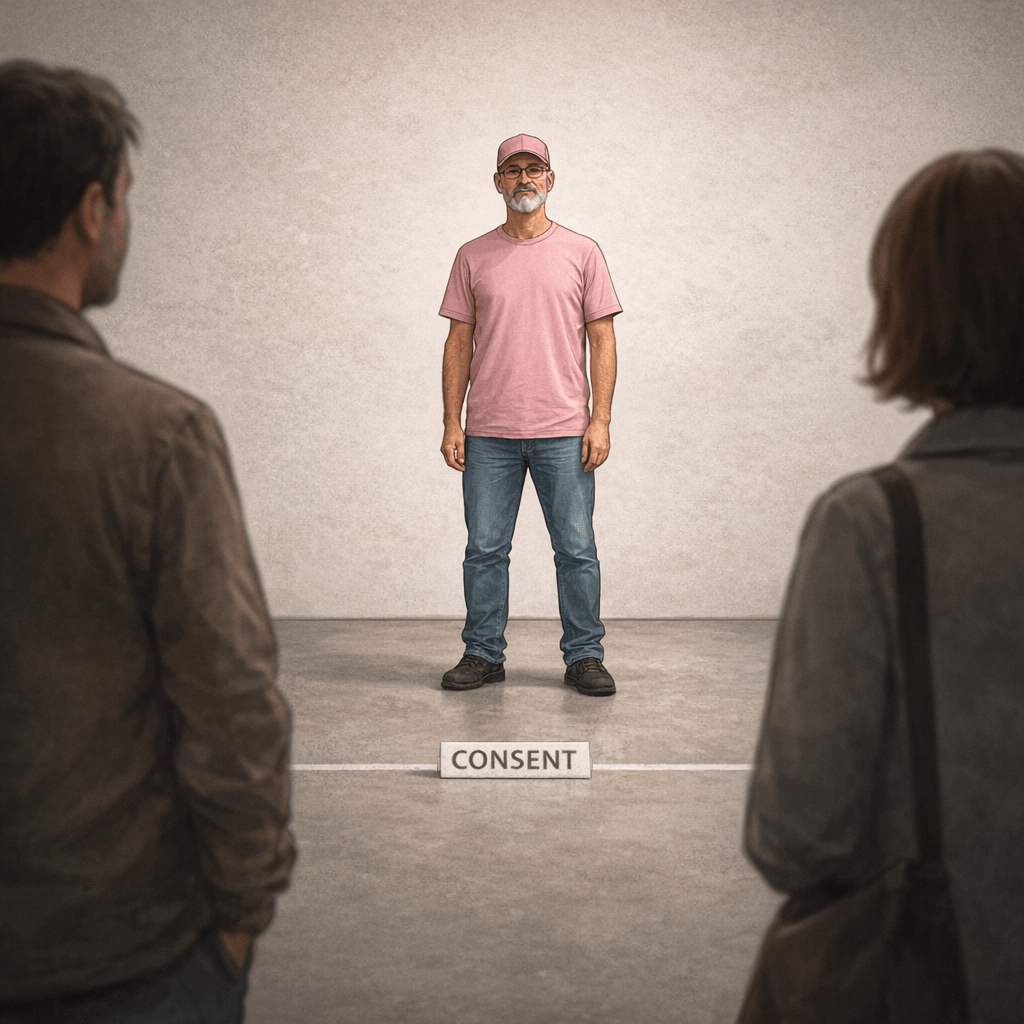
But the moment you introduce consent, something strange happens.
The conversation doesn’t evolve.
It stops.
Or worse – it recoils.
The Eunuch You’re Not Supposed to Admit Exists
A voluntary eunuch doesn’t fit into the story people want to tell.
There’s a kind of unspoken moral hierarchy at play. At the top, you have the tragic victim – the castrated slave, the court eunuch, the boy who had no choice. We are allowed to feel sympathy there. Encouraged, even.
But step outside that framework, and the tone shifts abruptly.
If someone chooses castration, they are no longer tragic.
They become suspect.
Ridiculous.
Disturbing.
A “dangerous weirdo”.
The same act, reframed through consent, becomes something people don’t know how to process. And so instead of processing it, they reject it.
Consent Is the Part That Makes People Angry
We live in a world that claims to value bodily autonomy.
We defend the right to tattoo our skin, to reshape our bodies through cosmetic surgery, to undergo sterilisation, to pursue bariatric surgery, to transition, to modify, to optimise, to express.
All of these involve permanent, sometimes extreme, changes to the body.
All of them involve risk.
All of them are, fundamentally, about agency.
And yet, when it comes to voluntary castration, that principle quietly collapses.
Suddenly, autonomy has limits.
Suddenly, people start talking about protection, about mental illness, about regulation. About saving someone from themselves.
Not because the logic is consistent.
But because this particular choice unsettles something deeper.
Why This Feels So Threatening
Voluntary eunuchs sit at the intersection of several taboos.
Sex.
Gender.
Control over the body.
And perhaps most threatening of all – the rejection of something that society assumes is fundamental: male sexuality as something to be preserved, expressed, even celebrated.
To choose to remove that is seen not just as unusual, but as wrong. As a violation of an unspoken rule.
It raises uncomfortable questions.
If someone can choose this, what does that say about the inevitability of desire? About masculinity? About identity?
And if their choice is valid… then what else might be negotiable?
It is far easier to dismiss the person than to engage with the question.
This Is Why You Don’t Hear About Us
It’s not that voluntary eunuchs don’t exist.
It’s that we don’t fit the categories people rely on.
We are not victims.
We are not easily explained.
We disrupt the narrative.
And so we are ignored, pathologised, or quietly pushed to the margins.
Even within communities that advocate for bodily autonomy, there is often a line that is not meant to be crossed.
We are on the other side of that line.
World Eunuch Day
So what does it mean to mark World Eunuch Day in 2026?
For me, it means refusing that silence.
It means acknowledging that eunuchs are not just historical artefacts or victims of cruelty, but living people with agency, identity, and voice.
It means recognising that consent does not make something less real.
If anything, it makes it harder to dismiss.
Because once you accept that someone can choose this path, you have to confront the possibility that your framework – your neat categories of acceptable and unacceptable – might not be as solid as you thought.
And that’s uncomfortable.
But discomfort is not the same as harm.
A Final Thought
You don’t have to understand voluntary eunuchs.
You don’t have to agree.
But if you believe in autonomy – really believe in it – then you don’t get to quietly withdraw that belief when it leads somewhere you didn’t expect.
That’s not a principle.
That’s a preference.
And World Eunuch Day seems like a good time to ask which one you’re actually holding.
 Eunuchorn
Leave a comment