
People like to talk about eunuchs as symbols.
We’re metaphors for lack, or purity, or sacrifice, or queerness, or deviance. We’re invoked to make points about masculinity, power, or control. Sometimes we’re pitied, sometimes eroticised, sometimes used as shorthand for “not quite human”.
That way of thinking is comforting – because symbols don’t require responsibility.
But historically, eunuchs were not symbols at all.
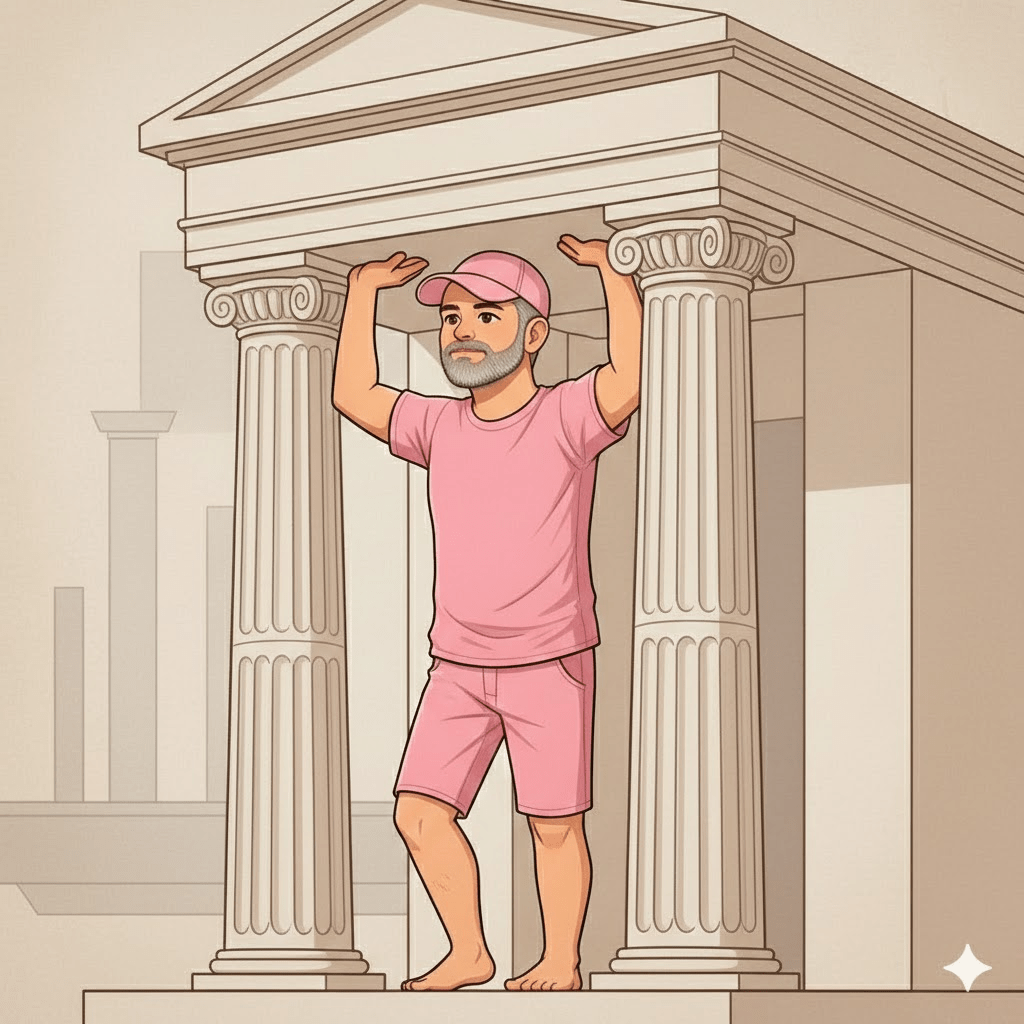
They were infrastructure.
Eunuchs as solutions, not identities
For most of history, eunuchs were not understood as an “identity” in anything like a modern sense. They weren’t a marginalised minority that societies struggled to understand and accommodate.
They were deliberately produced responses to very specific problems of power.
Again and again, across cultures that never spoke to one another, rulers arrived at the same conclusion:
If you want trust, continuity, and access – but don’t want rivals, heirs, or divided loyalties – you remove reproductive capacity.
Eunuchs solved problems like:
- Who can be trusted with intimate access to rulers or their families?
- How do you staff palaces without creating dynasties?
- How do you ensure continuity across reigns?
- How do you neutralise ambition without relying on virtue?
The fact that societies kept arriving at the same solution should make us uncomfortable.
Not because eunuchs existed – but because the underlying problems were never addressed.
A design shortcut that kept getting reused
Instead of fixing inheritance systems, patriarchy, or absolute monarchy, societies reached for the same workaround:
Remove the reproductive stake, and the person becomes “safe”.
No heirs.
No bloodline.
No future claim.
That’s not a moral judgement – it’s a design decision.
Eunuchs were a way of stabilising systems built on unstable assumptions: that power must be hereditary, that men are inevitably sexually predatory, that proximity to women equals threat, that ambition is biological rather than structural.
Rather than redesigning the system, the system redesigned the human.
And it worked – well enough to be repeated for thousands of years.
The uncomfortable modern echo
It’s tempting to think this is all ancient history. Byzantium, China, the Ottoman court – fascinating, but irrelevant.
Except we’re still doing it.
We just dress it up better.
Modern institutions are full of eunuch-logic:
- Background checks
- Security clearances
- Non-disclosure agreements
- Conflict-of-interest rules
- HR compliance structures
- “Zero-trust” architectures in computing
All of these say the same thing, quietly:
We don’t trust people. So we design systems that assume they will betray us.
Where ancient societies altered bodies, we now alter incentives, access, and liability. Where eunuchs were cut off from lineage, modern professionals are cut off from ownership, disclosure, or permanence.
No stake.
No legacy.
No leverage.
Same logic. Better tailoring.
So what does that say about eunuchs?
This is where it gets personal for me.
I write openly about being a eunuch – not as metaphor, not as kink shorthand, not as tragedy – but as lived reality. And that sometimes invites people to project meaning onto me.
But this isn’t about what eunuchs mean.
It’s about what societies kept needing.
If eunuchs keep appearing in history, it isn’t because of some strange cultural fascination with castration. It’s because systems of power were so badly designed that they required people who could never fully belong.
Eunuchs were never the flaw.
They were the patch.
The real design failure
The question I keep coming back to isn’t why eunuchs existed.
It’s this:
What does it say about civilisation that it repeatedly chose to unmake people instead of fixing power?
What kind of system finds it easier to remove fertility than to remove corruption?
What kind of order prefers irreversible bodily change to structural reform?
And why, even now, do we keep reaching for the same logic – only cleaner, quieter, and dressed in policy language?
If the history of eunuchs tell us anything, it isn’t about gender or sexuality.
It’s about how much violence systems are willing to do – as long as the system itself remains intact.
 Eunuchorn
Leave a comment