
Despite studying Ancient History at Uni, I first encountered the name Bagoas when reading 50 LGBTQ+ Finds by Ben Paites (page 9). And just like the first time I saw the word eunuch, something in me startled awake. Two and a half millennia collapse very quickly when you suddenly recognise yourself in a place you weren’t expecting.
Bagoas appears in the sources half-in shadow, half-in candlelight. We don’t have his diary (imagine!), only the reactions of men who couldn’t quite decide whether to admire him or pretend he didn’t exist. But the outline is clear enough: a young eunuch at the Persian court, clever, charming, politically literate, and very likely traumatised by the machinery that created him. Then along comes Alexander – twenty-something, brilliant, volatile, imperial to the bone – and their lives intersect in this charged, almost mythic way.
Most historians default to dry language about “favour” and “influence”, but the ancient sources themselves are far less coy. Curtius Rufus talks about Alexander kissing Bagoas in public at the insistence of the troops. Plutarch calls Bagoas “beautiful” and recounts how Alexander drew him into his inner circle. Arrian politely pretends none of this happened (you can practically hear him clutching his pearls). Even in antiquity, the story made people uncomfortable.
What fascinates me now, as an adult who’s spent far too long trying to decipher other people’s emotional wiring, is the question of attachment. Not romantic attachment in the modern psychological sense – we don’t have enough detail for that – but the emotional pull between them. Alexander collected people he felt safe with: Hephaestion, Ptolemy, the older tutors who shaped him. Bagoas arrived not as a general or a childhood companion but as a survivor of court politics – someone who knew how to read a room faster than most of Alexander’s Macedonian friends.
There’s an tenderness implied in the stories, a recognition. Eunuchs occupied a strange, liminal place in ancient courts: not men, not women, but always present, always watching, always necessary. If you grow up with your identity shaped by other people’s systems – their needs, their categories, their rules – you learn how to make yourself useful, safe, soothing. It isn’t hard to imagine the version of Bagoas behind the text: someone highly attuned to emotional weather, shaping himself around the moods of a man who conquered continents but couldn’t govern his own storms.
Maybe that’s why the kiss before the army lands with such force. It’s not the kiss itself – queer desire is all over Alexander’s life – but the fact it was public. He didn’t hide this relationship, and he didn’t care that his men looked down on Persian court customs. He kisses Bagoas in front of them, laughs, and carries on. A king saying, essentially: this is mine; deal with it.
I’ve always thinking a lot about recognition – the electric jolt of seeing an echo of yourself in someone from history. Obviously I’m not a glamorous Persian court eunuch lounging in silk (I mean, give me time), but there’s something in Bagoas’ story that feels familiar: existing in the margins of definition, navigating someone powerful, being shaped by systems you never chose, and still holding your own agency in small, sharp ways.
History rarely gives eunuchs anything like a full voice. Yet Bagoas keeps slipping through anyway – smiling, political, desired, indispensable, alive in these fragments. And for someone like me, reading him now, he becomes not just a historical footnote but a reminder: we’ve always been here. Our stories have always threaded through the centres of power, even when written down reluctantly by men who couldn’t quite fathom us.
And there’s comfort in that. Recognition, across centuries. Just enough to feel a quiet hand on the shoulder.
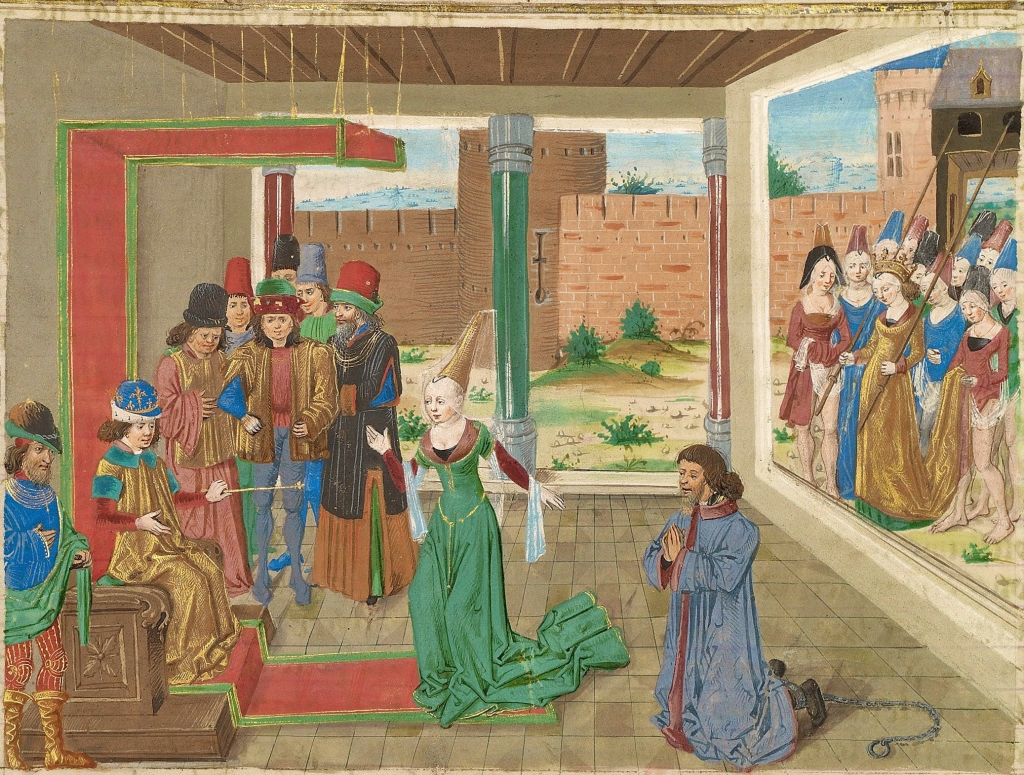
 Eunuchorn
Leave a comment