
The Weight of Remembrance
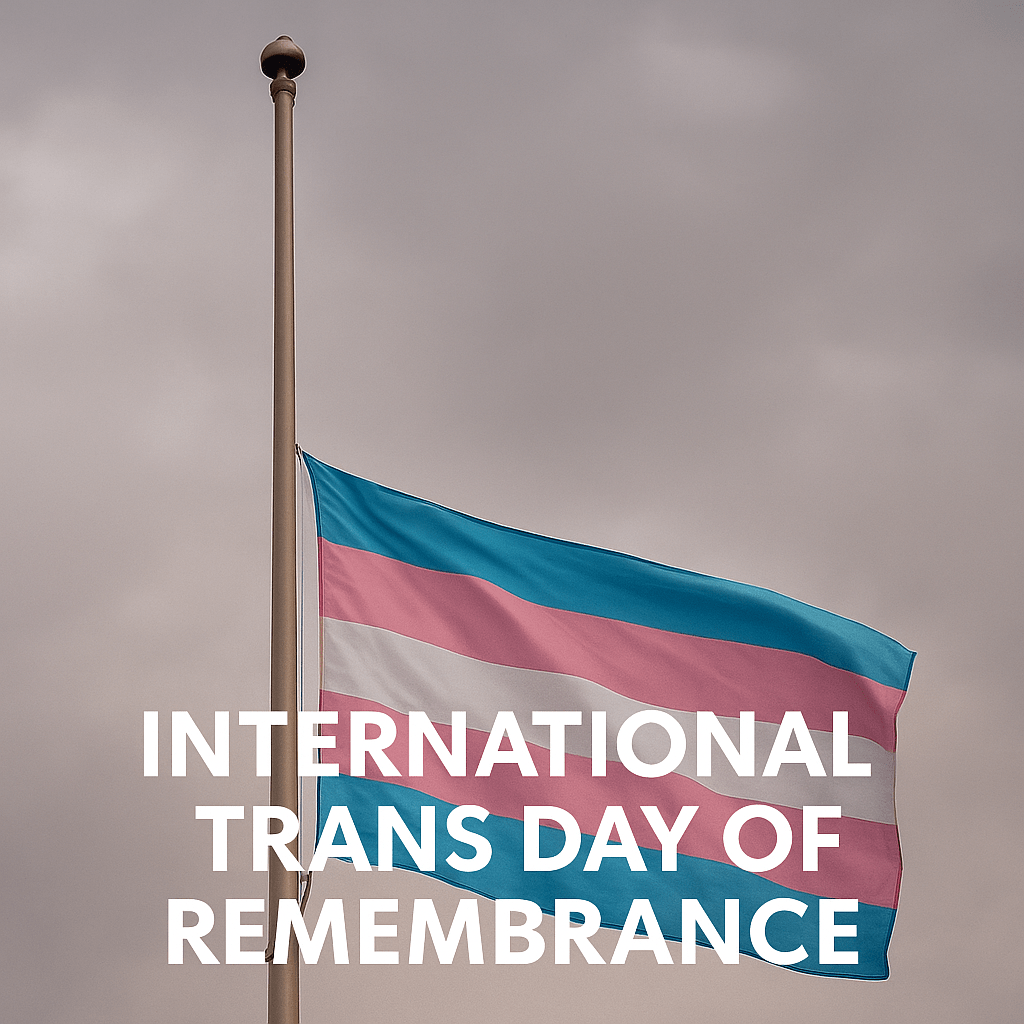
Every year on 20 November, communities around the world gather to mark the Transgender Day of Remembrance (TDoR). It began in 1999, after the murder of Rita Hester, a Black trans woman in Massachusetts. Her death – and the silence that followed – sparked outrage in her local community. Vigils were held. Names were spoken aloud. Those gatherings became the foundation of what is now an international day of mourning and solidarity.
At its heart, TDoR is a memorial. It exists because trans people continue to die from violence, neglect, and despair – because the world still finds ways to make trans lives unliveable. Each name read out at a vigil is a life cut short by hatred or indifference. It is a roll-call that grows every year, not because people are “becoming trans”, but because more people are daring to exist where the world can see them.
Visibility is double-edged. It brings recognition, pride, and community – but also exposure. Trans and gender-diverse people live with a level of scrutiny that most of us can hardly imagine. Every gesture, every photograph, every document can become a battleground. That’s why remembrance matters: it says we see you in the right way – not as spectacle, not as controversy, but as human.
As someone whose own identity sits quietly at the edge of gender’s vocabulary, I think often about the difference between visibility and erasure. Eunuchs have, historically, been both everywhere and nowhere – woven through cultures, courts, and religions, yet almost erased from modern consciousness. We are allowed to exist when we don’t look like anything. Trans people, by contrast, are punished precisely for looking like themselves.
That contrast matters. It reminds me that the ability to hide is a privilege – a form of safety that comes at the cost of recognition. TDoR asks us not only to mourn the dead but to confront the systems that make visibility dangerous: the laws, the rhetoric, the smirks in the street, the refusal to say a person’s name.
It’s easy to see remembrance as backward-looking, a litany of tragedies. But it’s also profoundly forward-facing. Each vigil, each candle, is an act of insistence: that these lives mattered, that gender diversity is not an error to be corrected, and that dignity should not require camouflage.
As November darkens, we remember not just the people who are gone, but the kind of world that made their loss inevitable – and the better one we’re still trying to build.
 Eunuchorn
Leave a comment