
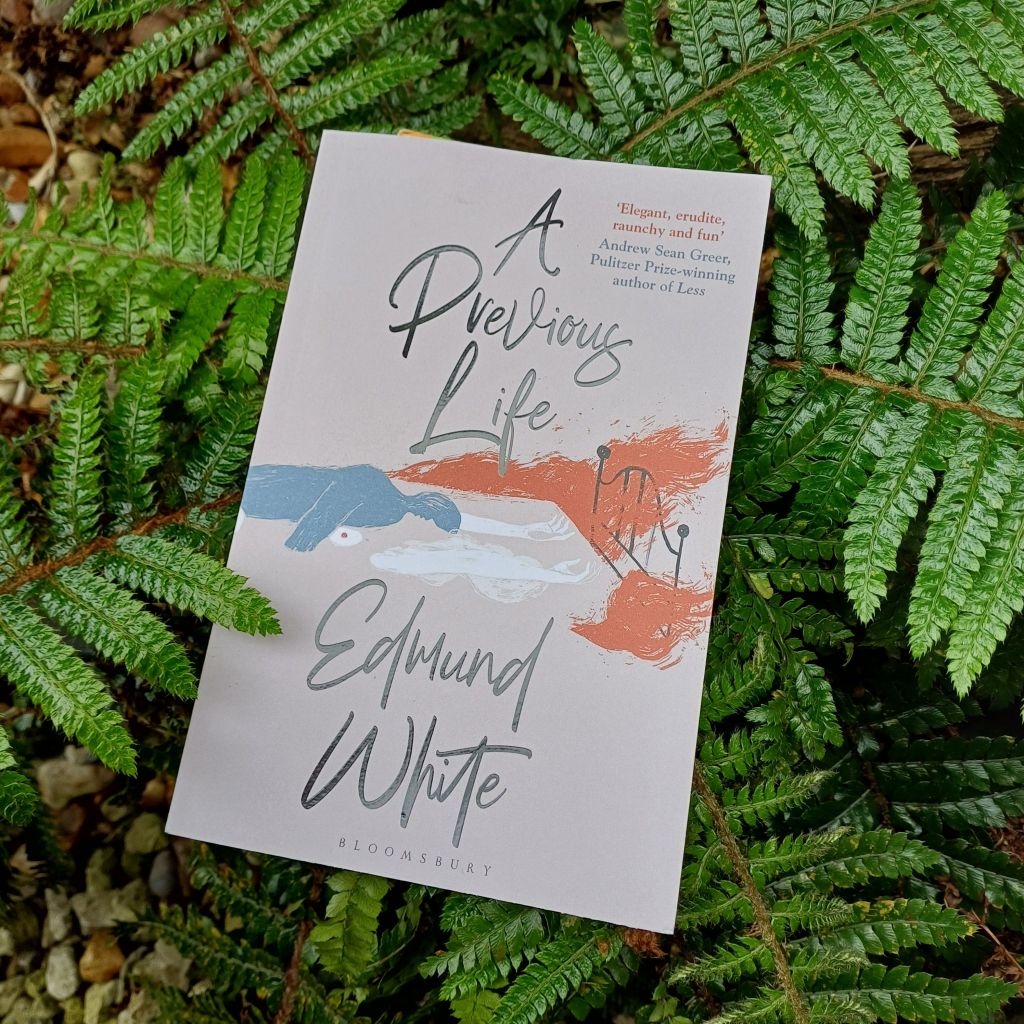
This is a posthumous novel; I don’t know how much are Edmund’s own words and what was added to complete the story. It is kind of autobiographical, but with an imaginative twist: it is set in the far future with the protagonists looking backwards towards a part of their life that they shared with Edmund. The future setting creates a strange melancholy distance, as if Edmund is eulogising his own life from a vantage point he never lived to see.
The main character is a Sicilian aristocrat named Ruggero, who had an affair with Edmund – or so the book says!
I was determined to make my marriage “work”, as though it were a job.
Page 153
This struck me hard because my husband always said that you had to work at marriage. Is that true? Should you have to work at marriage?
Why shouldn’t marriage be easy? If you click with somebody and they make you feel good and you make them feel good, what effort is there in that?
Why should marriage feel like a slog? Always uphill? Always wrong? Always confused?
Why shouldn’t marriage feel like a safe and comfortable old jumper? Or a party of two people just having fun?
Maybe marriages shouldn’t last forever. There is no logical requirement why a relationship should last the lifetime of those in it – unless that’s what they want. Why do we define a “successful” relationship as one that ends in the death of one of the members? That ignores any bitterness, misery, or loss that might have been endured during their life together.
Perhaps we should redefine a successful relationship to be one that lasts only as long as its members are happy, and ends with them as friends and still able to love the other, albeit in a different way.
Constance reacted as most people do when their evil relatives are bad-mouthed with a mixture of indignation and gratitude.
Page 35
I have encountered this strange reaction myself with people who have been abused: I am not permitted to criticise those who abused them. I want to condemn the abuser because they are vile, but also as a form of support for the abused.
The strange defence of the abuser completely wrong-foots me and breaks my brain – how can one show support for the abused otherwise? Maybe its actually simple: listen without judgement.
…but listening without collapsing my own moral instincts is harder than it sounds.
For someone like me on the spectrum, experience is a set of Rubik’s cubes I keep fiddling with, studying and imagining in newer and newer combinations until the solution instantly stares me in the face and so the colours unite.… No right angles, which come to me instinctively. I know how to imitate normality.
Page 165
Throughout the book, Ruggero displays a number of autistic traits, which piqued my interest because at least some of them I could identify with – for example his ability to focus and his need for his own company, and his deep obsessions and interests. Sadly, I can’t relate to his strong sexual energy and good looks – I have a layer of custard around my middle from an unhealthy way I self-sooth: FOOD!
However, he is also portrayed as socially capable, if needing time out to recover from society. Something else I could relate to.
It’s interesting to discover somebody in literature coded as neurodivergent without being an arsehole, and instead being sexually attractive and energetic.
Like myself, Ruggero isn’t crippled by his neurodivergence – its a source of his success as a harpsichordist, yet it make relationships exceedingly difficult because he cannot balance is needs with those of his partners.
Exactly like me.
I felt that White described a version of neurodivergence that wasn’t cringeworthy caricature, but is validating for somebody like me.
Gays think it’s part of their liberation struggle to be promiscuous. Once AIDS came along, of course, the stakes were higher; survival meant fidelity.
Page 182
Sometimes I think that my husband saved my life: we were monogamous – which in the late nineties was essential if we weren’t to become infected with HIV. Before we met, I was very promiscuous – although always “safe” in my practices. However, it would have just needed one unlucky slip up to catch a life-changing infection.
I find myself wondering how many gay couples fell into straight relationship patterns as a survival strategy.
Things are a little different now: HIV isn’t a death sentence, and it’s preventable with drugs and highly treatable if caught. Even some of the same infections that were around when I was young are more easily preventable now.
Edmund lived through this era and saw many of his friends die of AIDS. Its a theme that reappears throughout his writings and carries his grief to later generations who may not know what it was like to leave through such a time of fear and loss.
It is an essential part of our queer history and we must not forget it.
I enjoyed this book, but it left me feeling very sad – maybe because I am in my own breakup and the pain of it is still vivid for me.
Edmund was writing about one of his great lovers years after his own death – imagining that this lover (Ruggero) is jilted under the similar conditions as Edmund himself was jilted by Ruggero, but Edmund sees himself as the cause of Ruggero’s abandonment of him.
He imagines a happy old age for Ruggero – whom he loved until his own death.
This book struck with me in this time of my life – relationship breakup and trying to find a new place in the world.
Still loving the man who has gone.
 Eunuchorn
Leave a comment