
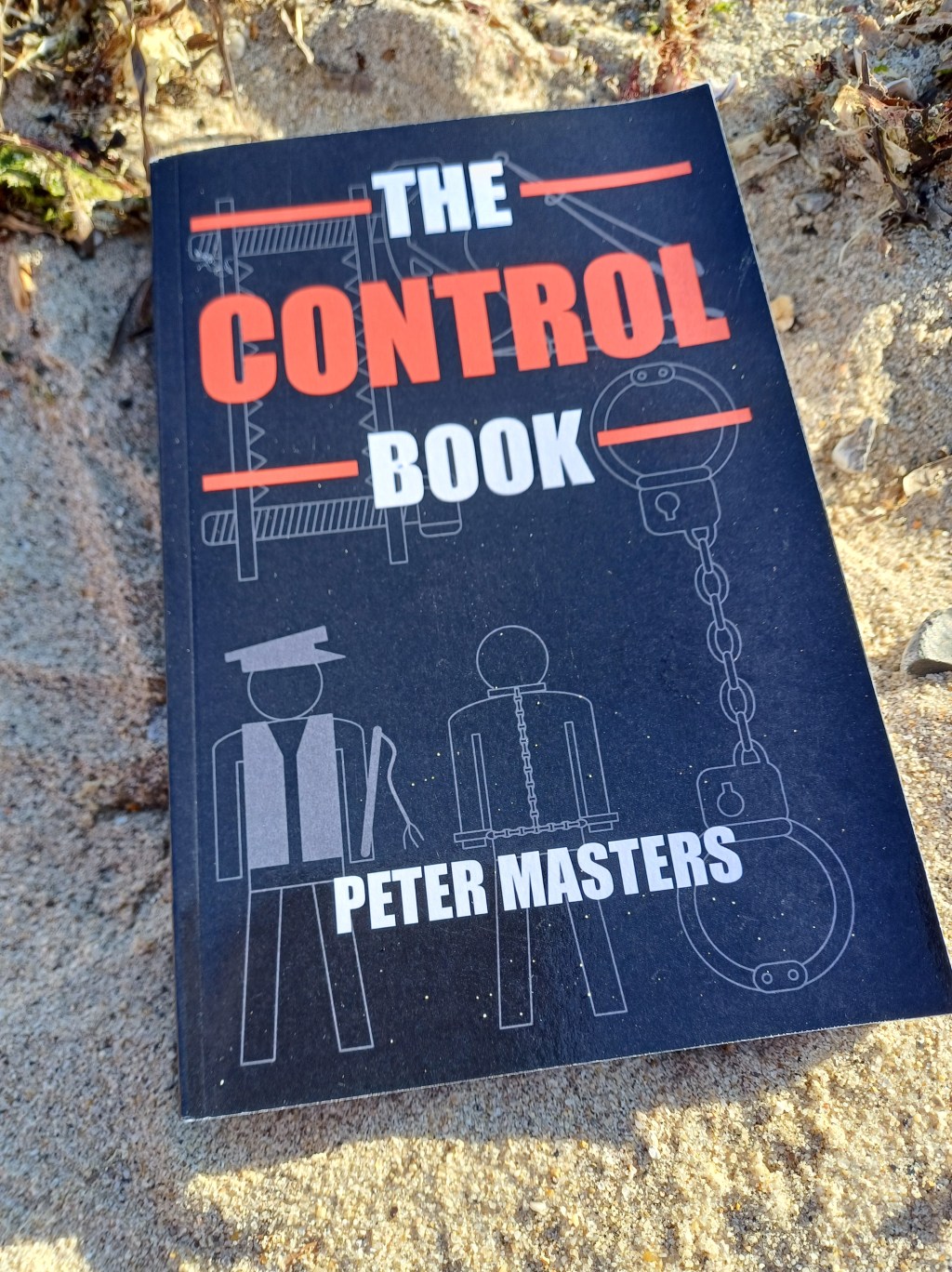
Continuing on from https://eunuchorn.uk/2024/08/03/the-control-book-book-review-part-1/ …
This often means that along with what you think you’re saying, your subconscious mind and your unconscious mind are also sending it messages, modulating your voice with hidden-to-you meaning, or else they are adapting your posture and movements to reflect what they are trying to express.
Page 99
This is a nightmare for a neuro-divergent: as a conversation gains emotional intensity and the pace of dialogue increases, my ability to process what is being said fails to keep pace.
This extract underlines the problem as I perceived it with yet another problem.
The basic problem, for me, is that along with the simple words, there’s also the tone of voice, tempo, volume, and body-language to take into account. From that lot, I need to work out what you mean and what feeling(s) you are expressing. I then need to work out how I feel about it – and I might have multiple feelings to consider – and which of my feelings best seem to match with the mass of data thrown at me in the original message. This extract further says that there are potentially additional messages coming my way from the other’s sub- and unconscious. Then, I expect, mine own sub- and unconscious will be trying to get their tuppence in as well.
By the time I have processed all this information and decided on a response, the conversation has moved on and I have a) lost the thread, b) lost my moment to respond, and c) probably the other person has picked up on the fact that I am no longer following what they have said.
Another interesting characteristic is that, even with the same partner, you aren’t always talking to the same person.
Page 100
The book seems to define two states for the submissive; one which I will name as “just a person” and the other as “true submissive”. The author describes flicking switches to get the potential-submissive into their submissive mental state.
Within both the “just and person” and “submissive” headspaces, there are moods that change how they will respond and react to stimuli.
As your subconscious and unconscious aren’t generally directly accessible, observing yourself when you are interacting with others, and taking note of what you do, and taking note of your own reactions, are good ways of collecting information about these normally hidden parts of yourself.
Page 112
Hey! I keep a blog that seems to have become my place for reflecting on events in my life, conversations, things I read, and things I experience!
Love might be desirable, but before desires can enter into the equation, the needs and hungers must first be satisfied.
Page 124
This extract refers to the need and hunger for control and to be controlled being satisfied before life can flourish. I’m extending this to say that all needs and hungers must be met first – in my strange brain, this means that my need for routine, my need for my special interests, and my need to manage my emotions in the way that works and not the way society – or my husband – demand.
However, my husband also has needs that must be met – that deserve to be met – that need to be met for his own health, happiness, and safety.
He has asked whether I think that my needs are more important than this. Damned good question.
What do you want as a submissive?
This section of the increasingly inaccurately described “book review” turns the questions in the section “4.1 Two different types of control” and flips them into questions for my submissive identity.
Is it an opportunity for you to get experience or to learn?
Yes and yes. I have no experience, so I need to learn.
Is it for sex?
On this I am not clear. Being dominated, and particularly restrained, are hugely erotic for me … however they are also very peaceful states to be in, where I may not feel the slightest inclination to get an erection or ejaculate. Indeed, I think the memory of the encounter might be more sexually charged than the encounter itself, which might be almost spiritual in how I experience it – or so I imagine!
Do you want somebody for service? If so what kind of service? Personal assistant, house-cleaner, gardener, whore, supplier of sexual orifices?
This question is really important for me, yet it is one for which I don’t feel that I have an answer. Do I just want to be a houseboy, and cook and clean for somebody else? But is it all about sex?
I know that I have certain kinks (restraints, puppy play, being over-powered, some humiliation); what is the corresponding kink in a dominant that complements them? So that is not all about my fulfillment but about mutual satisfaction?
Having my liberty taken by somebody who is excited to take it is exciting.
Surrendering to somebody who is excited to receive and use my surrender is exciting.
Are you looking for an outlet for your submissive drive or your needs to be controlled?
I do not know how much I am willing or able to surrender our have taken from me.
Do you enjoy being trained, and are you looking for somebody to train or mould you?
So I am looking for somebody who will be willing and excited to help me
Are you looking for an emotional involvement?
Well, I think that I may well be polyamorous, or at least I am open to finding out. I do not think my husband is open to such exploration, and at present, he is my only relationship and would remain my primary partner.
Whilst I might be open to the idea of emotional involvement, there is only so far that I could take it right now.
Are you looking for somebody into bondage or causing pain?
A lot of restraint! Mixing up positions, durations, materials, suspension if possible! Pain I am less certain of – some for sure to sweeten the experience – perhaps its something to be explored.
Are you looking for somebody challenging?
I seem to have a knack for finding people who can stretch my mind and experiences – I would expect a dominant to be no different.
Are you looking for playfulness?
Absolutely! I enjoy being teased – now that I finally understand that this is play.
Are you looking to be an outlet for somebody’s sadism or cruelty?
Uncertain: my Dark Fantasies, if realised, would require somebody with a cruel streak.
Are you looking for an opportunity to learn more about yourself?
Always! I love learning about myself – this last year has been the greatest adventure of my life and I want the journey to continue for ever!
Are you looking for the opportunity to serve?
Possibly … uncertain at this time.
Are you looking for an intellectual challenge?
Always! Something that makes me think and causes me to explore and experience more of the mysteries of life and existence.
Are you looking for bondage?
Again, uncertain … this needs more research.
Reflections on section 4.4 Structure
I realised that I like structure on my life. I think this may be okay part of my ASD nature. Perhaps that’s one reason why some kind of Dom/sub relationship has an attraction.
As somebody who needs routines, and having experienced at first hand the conflict that a strong need for routine can cause between myself and somebody who is routine adverse, having a somebody define routines for me would have the attraction of reducing conflict and stress.
Ownership is just actually just an idea, one of many that lubricate the wheels of modern society.
Page 157
There we have it: ownership (and therefore property) is a social construct. I live in a flat (at the moment) which is “owned” by a landlord. I “own” a house, which (under certain circumstances) could be taken from me by the bank. I “own” a car, a bike, a phone, a computer, any one of these things could be taken from me by theft – and whilst I mightn’t like it, I probably won’t be able to recover them and they will acquire new “owners”.
There are times when the state may take my things – even my house.
The things I list are all “mine” by consent and construct of the society I live in.
If I were to take on the role of “slave” in a BDSM relationship, that “ownership” isn’t recognised by society and therefore is not enforceable – it must therefore be consensual.
If ownership is actually a concept, can it be a need? If it isn’t a need, then what is it that many submissives hunger for when they feel they need to be owned?
Fascinating! I would say that in the realms of BDSM, that “ownership” is a state of mind as much more than any physical constraint on a person in this age. For me the idea of having an “owner” is somehow exciting – there’s a feeling of safety in that thought. The idea that I am somebody’s property is sexually exciting, although the reality of slavery is probably much less pleasant, being more mundane and banal.
Ownership, though, what does that mean for me – again safety comes to mind.
Why is that? I do not know.
Should you attempt to completely satisfy a submissive’s hunger or need? It should you leave them still a little hungry, possibly to keep them motivated, or possibly to remind them that they aren’t the ones who controls the satiation of their hunger?
In what situations is it a positive experience for the submissive fit you to manipulate them through their hunger?
Page 173
Orgasm control seems to be a common (and to me exciting) means of controlling a submissives hungers. This appeals and excites me – I have previously enjoyed chastity and have wanted somebody to take my keys from me. Sexual frustration, whether complete denial or edging, is fun and rewarding. However, without testosterone, denial of orgasm is likely to result in me losing my erection. And without testosterone, I never feel sexually frustrated.
What does it feel like to be controlled?
Page 179
Depending on the context, either extremely irritating or extremely exciting. Consent and boundaries are key here for me to get the most out of being controlled.
What does it feel like to be in control?
Page 181
I take control when there is a power vacuum because I need structure and routine. When those things are disrupted or withheld from me, I will assume control and impose whatever structure I need to regain my peace of mind.
I do not enjoy control. However, I do enjoy caring for people. I have enjoyed running a team, and encouraging harmony amongst its members. Structure is important to me.
Whilst structure is important to me, hierarchy isn’t necessarily so. I have no patience with cumbersome management structures of chains of command. I will ignore rules that make no sense.
Are there times when your submissive doesn’t need to know what’s going on? … Are there times when they definitely shouldn’t know? … Are you asserting control over them by keeping them ignorant on assume issue?
Page 187
Absolutely! Part of being out of control and in somebody else’s control is not knowing what’s going on. In the world of control, ignorance can be bliss!
Is love necessary for a satisfying control-based relationship to work? What can love add to such a relationship? What can love take away from such a relationship? Is submission deeper when there’s love involved?
I have asked my partner to allow me to participate in a long-term relationship with a dominant. I believe that a long-term relationship is necessary to really develop the trust necessary to delve as deep as I can into my own psyche.
I feel that there is a risk in such a relationship: if my needs are well met and I develop a deep sense of trust, might I fall in love with my dominant? I believe that I have some polyamorous qualities and may be able to form multiple romantic and/or sexual relationships. However, I do not think that my husband can – and, after nearly twenty-seven years, is it even fair for me to ask him for this?
Whilst I define myself as a submissive type, would I be happy with a long term control-based relationship, or do I want short periods of being controlled and dominated?
What I want and what I might be able to get “approval” for are two different things. I want a long-term relationship that will enable the development of trust and a gradual transfer of control as trust is developed. What my husband might agree to is very different. We have discussed having an open relationship, which despite seeing to agree to he is not happy with and I am not certain that we actually have an agreement.
Why did “The Control Book” make me feel uncomfortable?
Control has always been a difficult subject in marriage, with my husband feeling that I was controlling. I can understand why. My moods were controlling. I can only hope that this journey of self-discovery leaves me understanding how to manage my moods.
The question of control also comes up with who has the right to initiate work in the home. I have a habit of immediately rejecting ideas that he suggests. My dad was just the same and mum developed a trick to “get her way”: she would suggest something knowing that my dad would reject it, go away and think about it, forget that it was her suggestion, and then suggest it back to her. “That would be lovely” was her response.
My husband won’t manipulate me in that way, and neither should he have to. Therefore, I need to work out a mechanism by which I can go through a version of this process without the manipulation and without the immediate kickback. (By the way, this may be part of a “pathological demand avoidance”, which commonly accompanies autism). Obviously, the answer must be for me to say “can I get back to you?” (through gritted teeth, if I know how my brain words).
I hate being accused of being controlling. I do not like to be in control.
This book also made me question whether I have been controlled?
Why was I asked to read “The Control Book”?
After reflecting on this book, I think the first message that I take from it is “consent”: in a BDSM relationship, the first step in the transfer of control is consent. It is important that I understand the importance of consent.
I think that it has given me cause to consider what kind of dominant/submissive relationship that I would want to be part of. Of course, I will never really know unless I become involved in such a relationship.
A friend recently said that he thought that I could be a dominant. I was “definitely not!” I think that he was confusing my drive towards castration as an example of having a strong will – he may be right. Personally, I think that its an example of a hyper-fixation working: autistics might have meltdowns when their hyper-fixation is interfered with.
As mentioned above, control has been an integral part of my marriage. How to return control has always been a problem – I may not like to be in control, but neither do I like to be a punchbag (verbal or physical). I also have a duty to care for my husband the best way that I can – which sometimes means assuming control.
My husband and I need to manage the return of control so that its transfer is smooth and my husband’s agency is restored healthily.
There is also a question of “have I been controlled?” I have been held hostage by my husband’s illness. I have given up more than I should and less than I should. I gave up some of my special interests (books! I let my books go so many years ago! I have always wanted a book collection – a library – a peaceful room). I never shared my inner thoughts and feelings (how could I? I didn’t know what they were).
The question of who has controlled who needs more reflection.
This isn’t a think book and the words are neither tightly packed nor obtuse in meaning, yet there was a lot that I took from this book – even as a subby-bottom-type. Its well worth a read for anybody wishing to explore a control-sensitive relationship.

 Eunuchorn
Leave a comment