
Fishbourne Roman Palace
My degree, thirty years ago, was ancient history. I loved it and have watered that interest in years since. I was born in Bristol and went university there, but I never ventured as far as Hampshire. Not long after we moved, we went to Portchester castle (a well preserved Roman fort near Portsmouth).
Today I took a long overdue drive to Fishbourne Roman Palace.
I suppose one of the reasons that is not gone out of my way to see it is that Roman remains in the UK are rarely more than a couple of centimetres tall – and I would feel robbed after seeing the magnificent remains in Italy.
I bought the guide book, as it looked to be of decent quality, and retired to the café to read it. It was very informative. I don’t usually read the guide book before going into the site, but perhaps I shall do that in the future.
Just as I was about to go into the museum area, a guided tour started, led by a fellow called Alan. He looked and sounded like an Alan. To complete the appearance, I think a knitted waist coat would be required.
He was very informative and knew a lot about the site and Roman history, having taught that she the Cambridge Latin Course at A level. He loved answering questions and was clearly in love with the subject. He had a wonderful puppy dog energy on his favourite subject and liked to encourage it in his audience.
The original building, at it’s greatest extent had a footprint larger than Buckingham palace. We know that it wasn’t as tall as Buck House because the foundations wouldn’t have supported the height in most areas. However, once upon a time, there were two enormous halls – we know the height of those from the remains of the columns, which further an exact mathematical relationship between their bases (which remain) and their capitals (some of which have been found).
Despite being the largest such palace north of the Alps – on a comparable size to Nero’s golden palace in Rome itself.
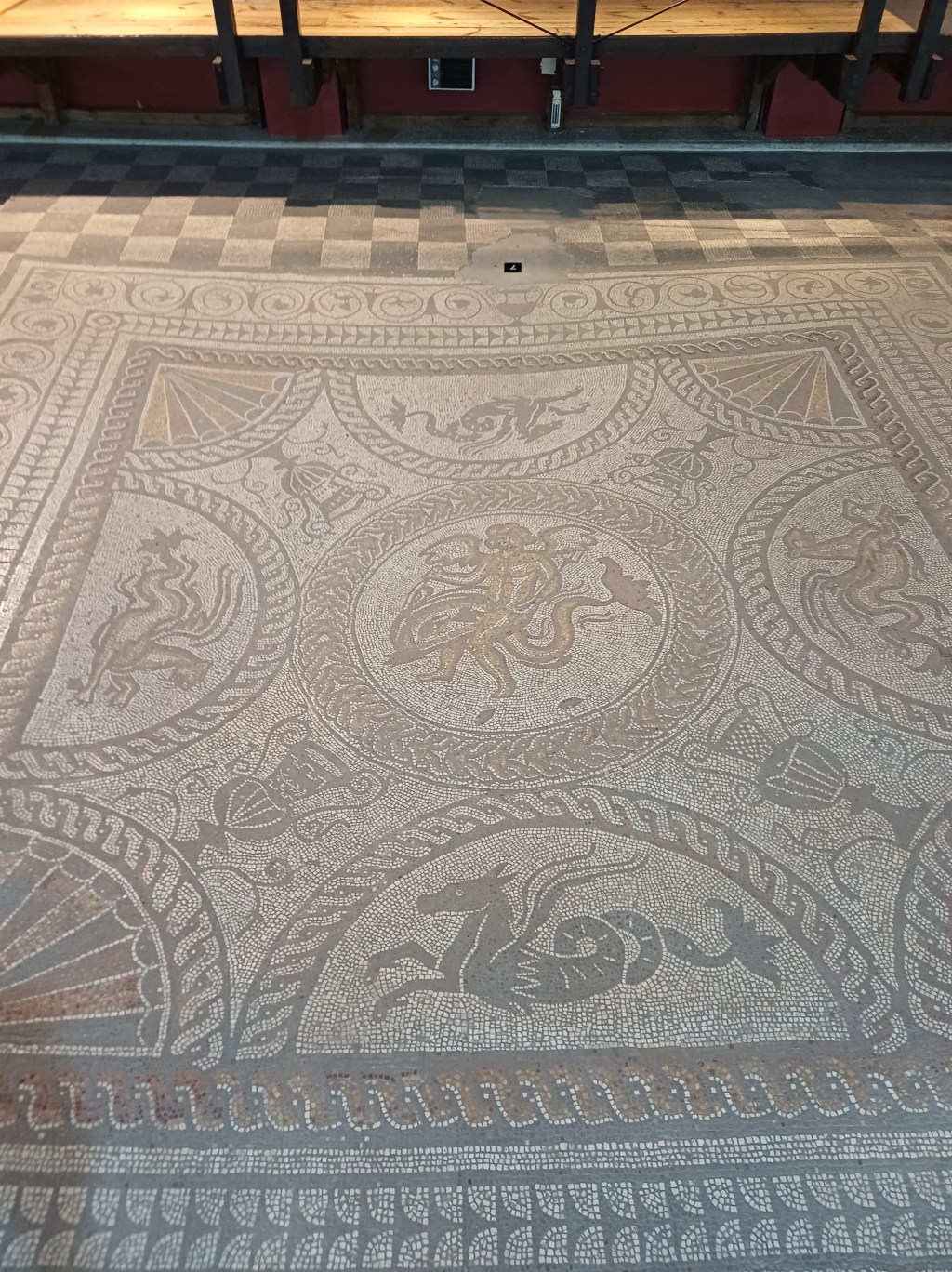
The mosaics are the star of the show. Some of them are on extraordinarily good condition. The “Cupid on a dolphin being the best”.
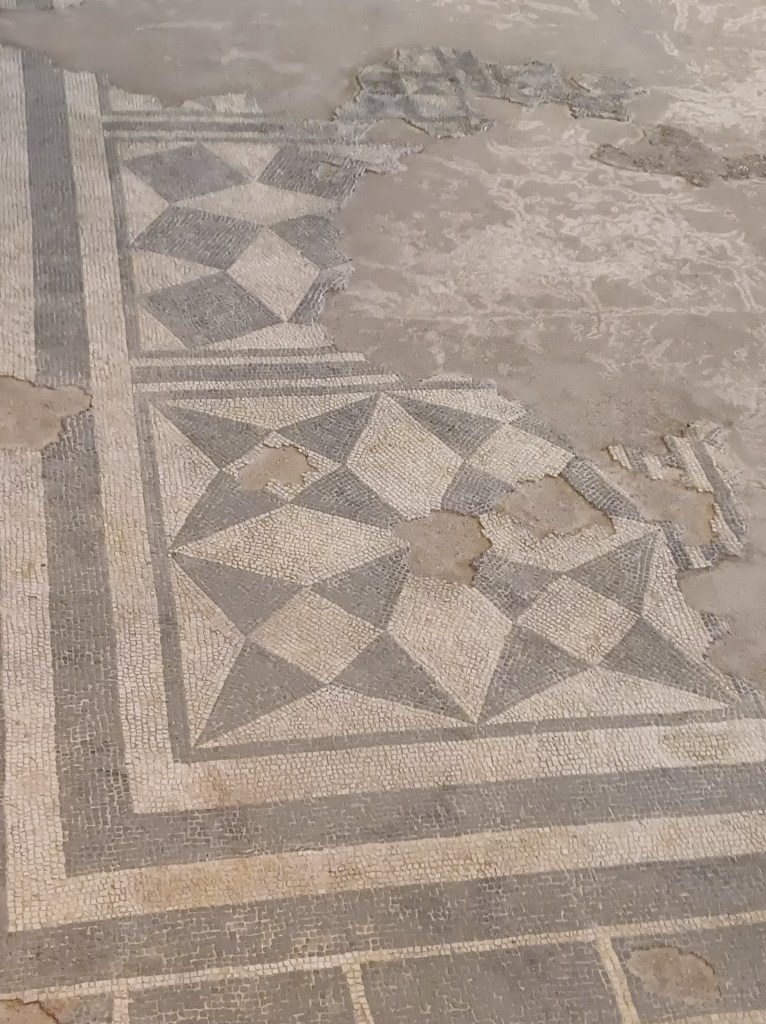


Others tell a story and suggest (to me at least) a relationship through time into medieval and renaissance art; the sort of thing my friend, Tacitus, might be interested in. Indeed, I’ve sent him some photos to see what he makes of them.
The “Cupid on a Dolphin” is particularly interesting not for its central design, but for the apparent “mistakes” and “cost cutting” taken to complete it. Pieces of pottery used in place of red stone, errors in layout, some of which might have been deliberate, others I wonder at. I studied the patterns for a while, noting the hiccoughs on the design.
What I really noticed about the design was the two wyverns either side on the central Cupid. The wyverns was the symbol of the Saxon kingdom of Wessex. I asked the guide about it, but he’d hadn’t inferred the link. He did say that in Saxon times, the palace was in ruins and known as “The Fallen Hall”. I wonder whether the totem of the wyvern was taken from this very pavement. Tacitus might be able to shed light on it.
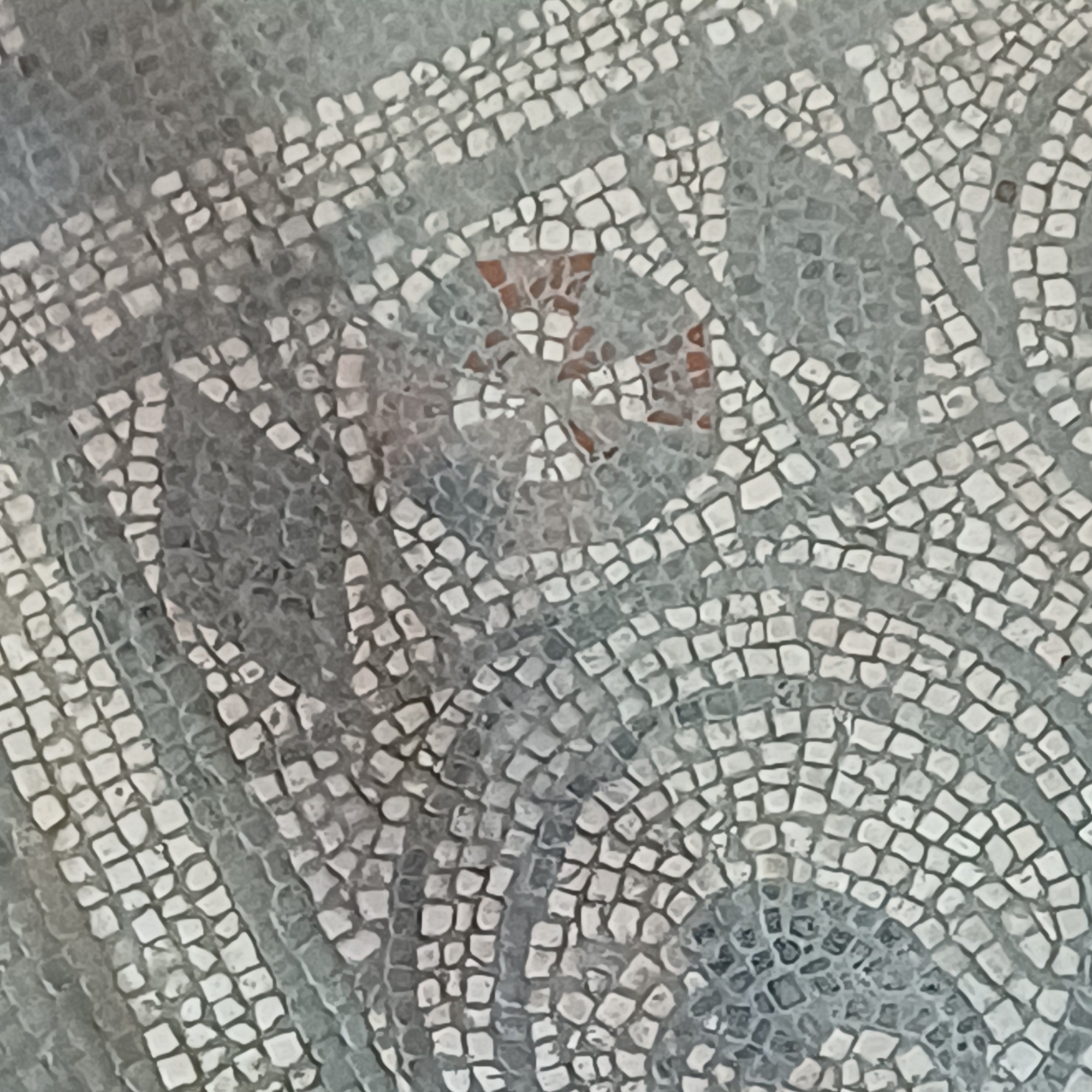

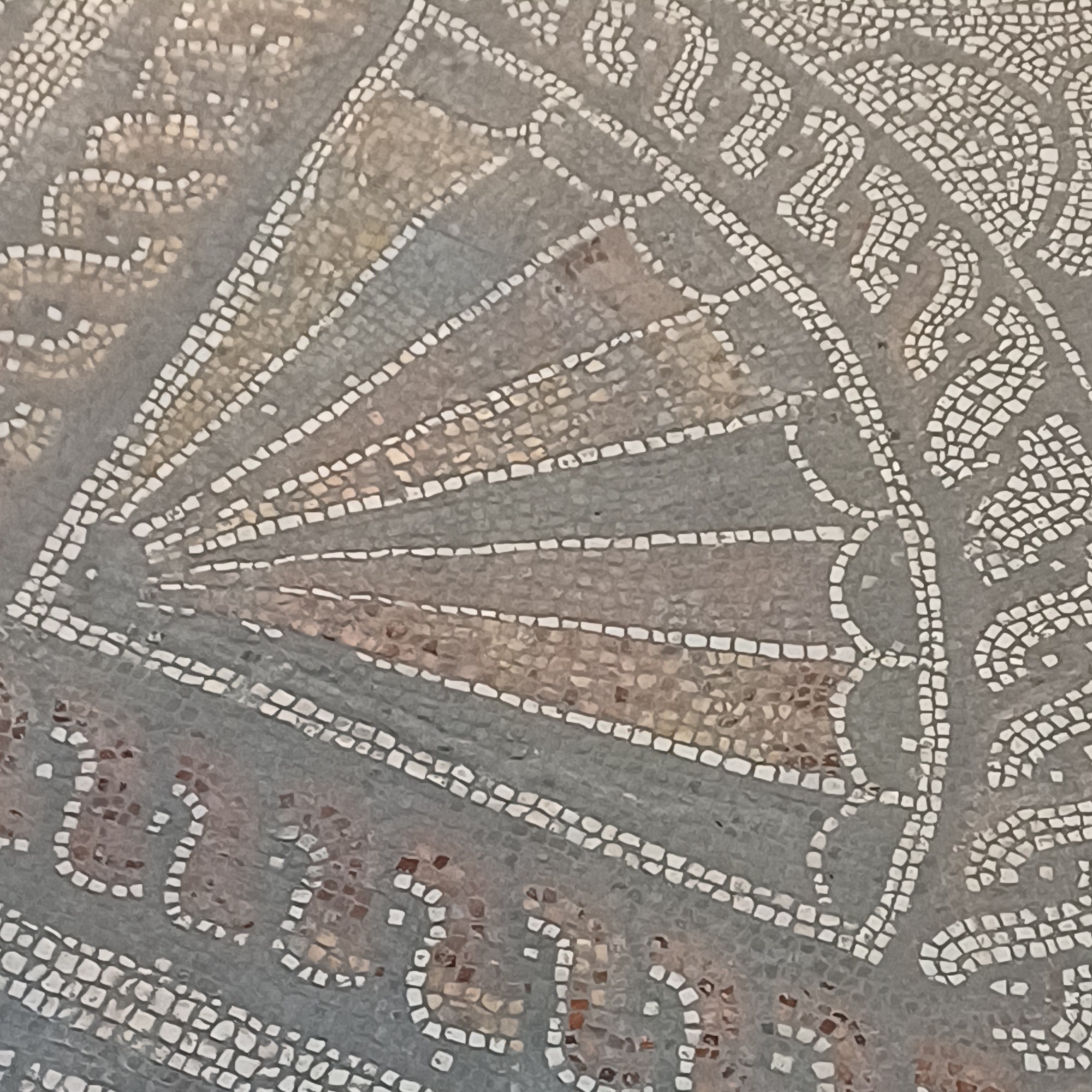
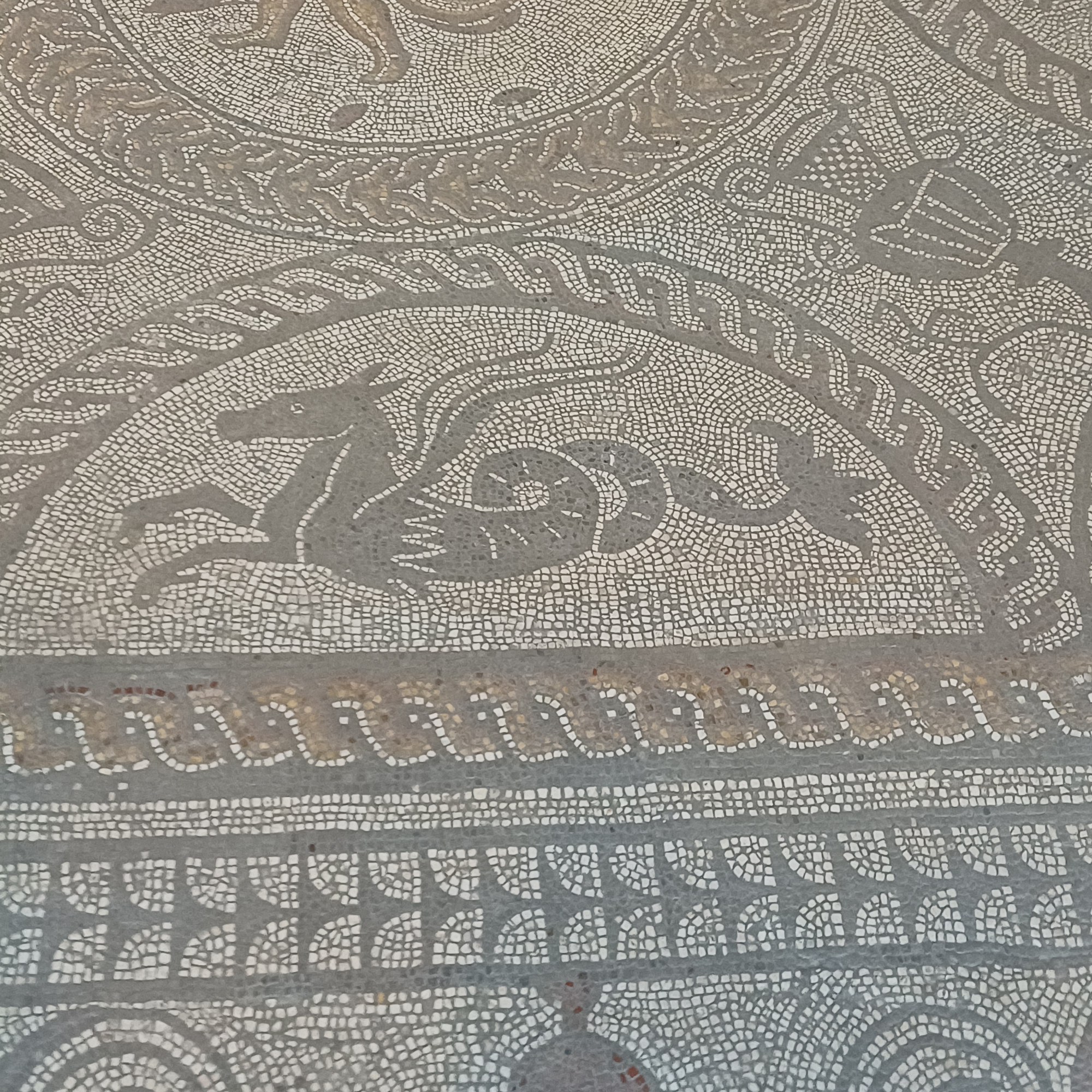
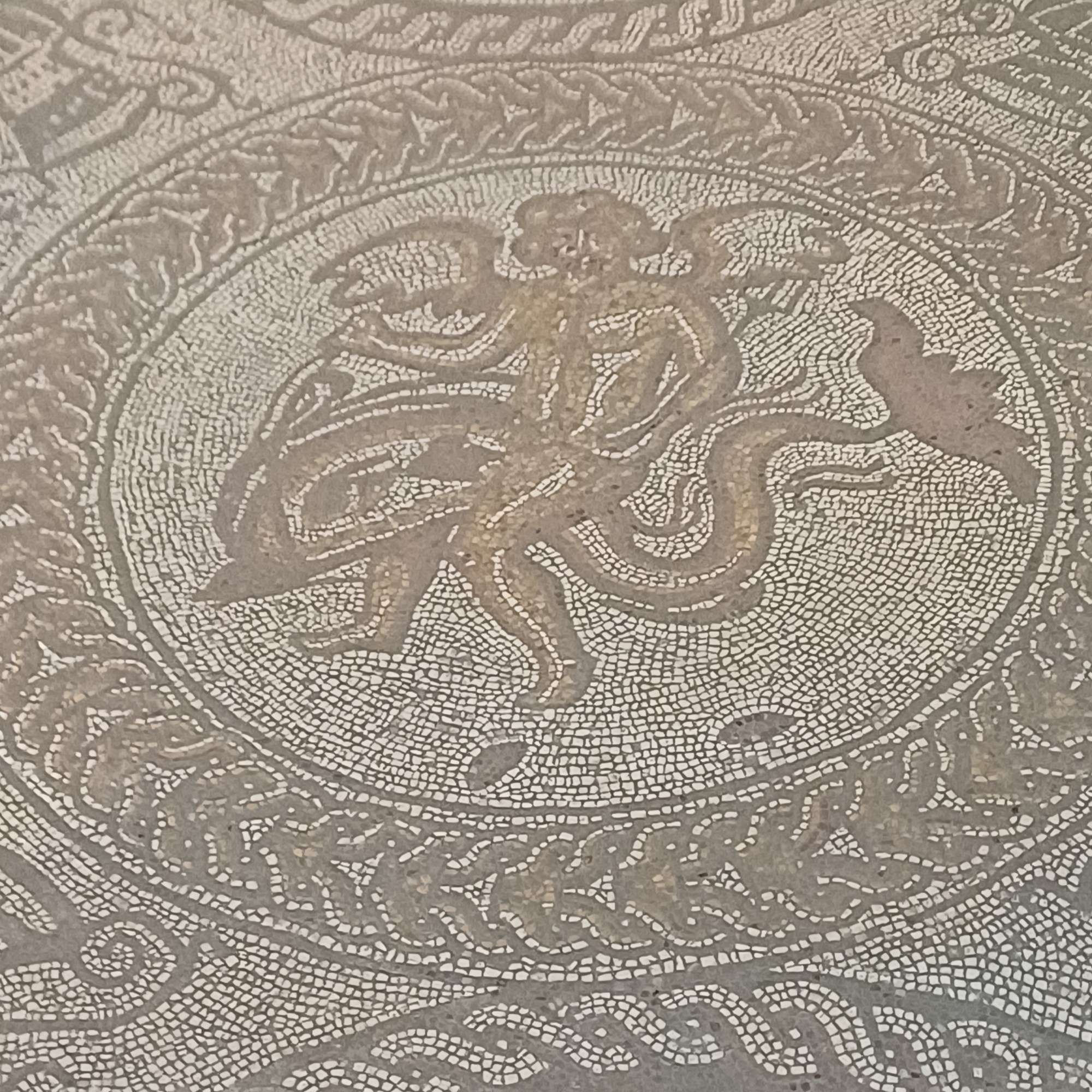

The museum was interesting, well laid out, and there was plenty for kids to do. Being the school holidays, there was no hiding from them!
On the way out, I spent a little time on the gift shop. I noticed a poster of gold Roman coinage from Augustus (the first Roman emperor) to Romulus Augustus (the last Western Roman emperor). I used to be really into numismatics (study of coins) when I was at uni, and it still interests me now.
I noticed a few patterns in the coins:
- All but one of the emperors faced to the right. The exception, a very late coin, face forward. None faced to the left, which would have been the sinister (Latin for left), and therefore unlucky direction to face.
- The earlier emperors were (in my opinion) more realistic. The later ones took on a design note similar to the style seen on Byzantium.
- The eyes gradually got bigger and bigger.
- The earlier emperors wore laurels (I think this was the majority), then crowns like a sunburst, with a few wearing nothing.
- All that stopped with the emperor Constantine the Great, after which a diadem was worn by almost all the emperors.
- My guess is that laurels were associated with Apollo, which meant they were pagan. The sunburst crown would again be something associated with sun gods.
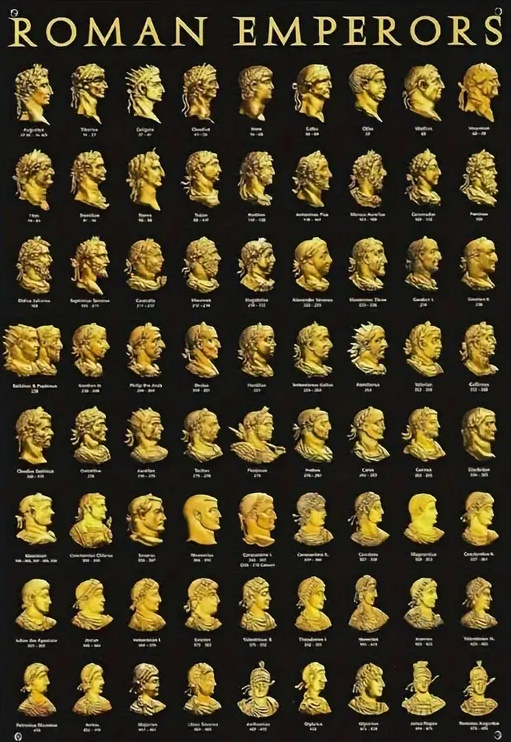
- The diadem looked to always be of the same design, which suggests to me that it became a constant symbol of the emperor and was passed down; I have never heard of a coronation in the modern sense of the word, but there might have been some mechanism for handing this piece of regalia along.
- All this time I am staring at this poster spotting patterns – that’s a very ASD thing to do!
Hayling island
I parked up on the sea front near a light railway; in fact, I had to cross the lines to get to the car park. The train driver waved me across while he waited for me.
I had a spot of lunch and a coffee. Smoked salmon on sour dough (very nice) and an oat milk latte, which wasn’t half bad.
Then I walked along the “promenade” breathing in the sea air and looking at the plants that grew amongst the pebbles.
I followed a sign that promised to lead me to shops. It led nowhere: the “shops” was just a local convenience store.
I wandered around the east of the isle for an hour or so, sweltering in the hot sunshine, so different from this morning’s cold rain. Then I returned to where I’d parked the car. I noticed it was a pay and display, so I hoped that I hadn’t got a ticket and paid for a few more hours.
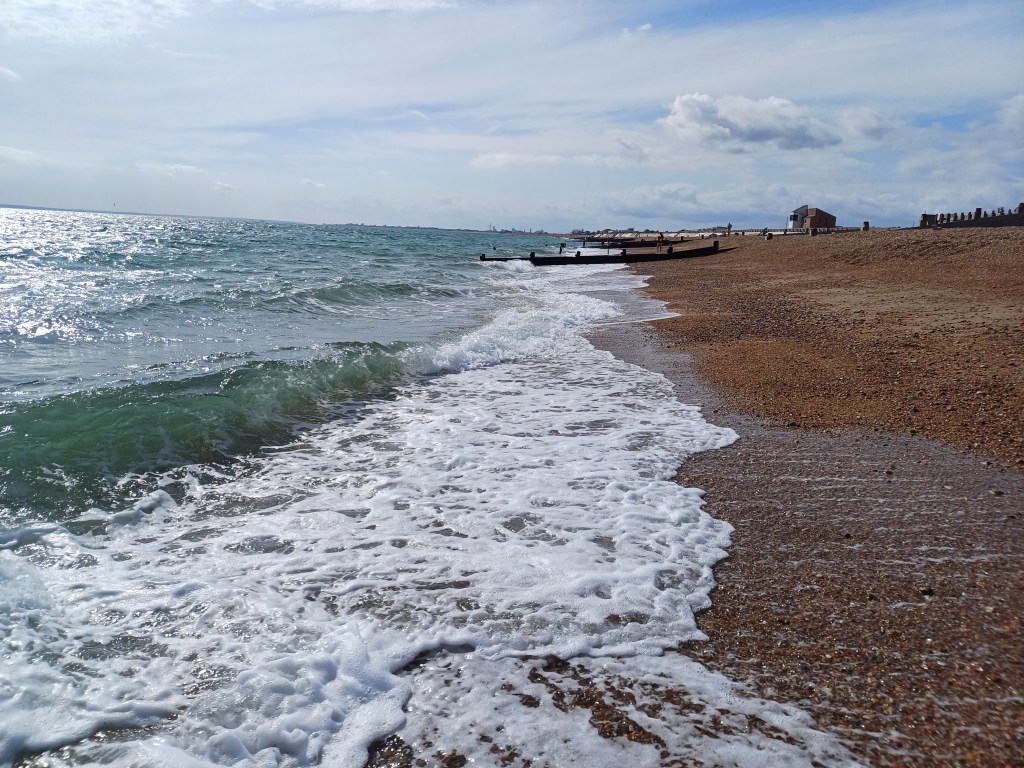
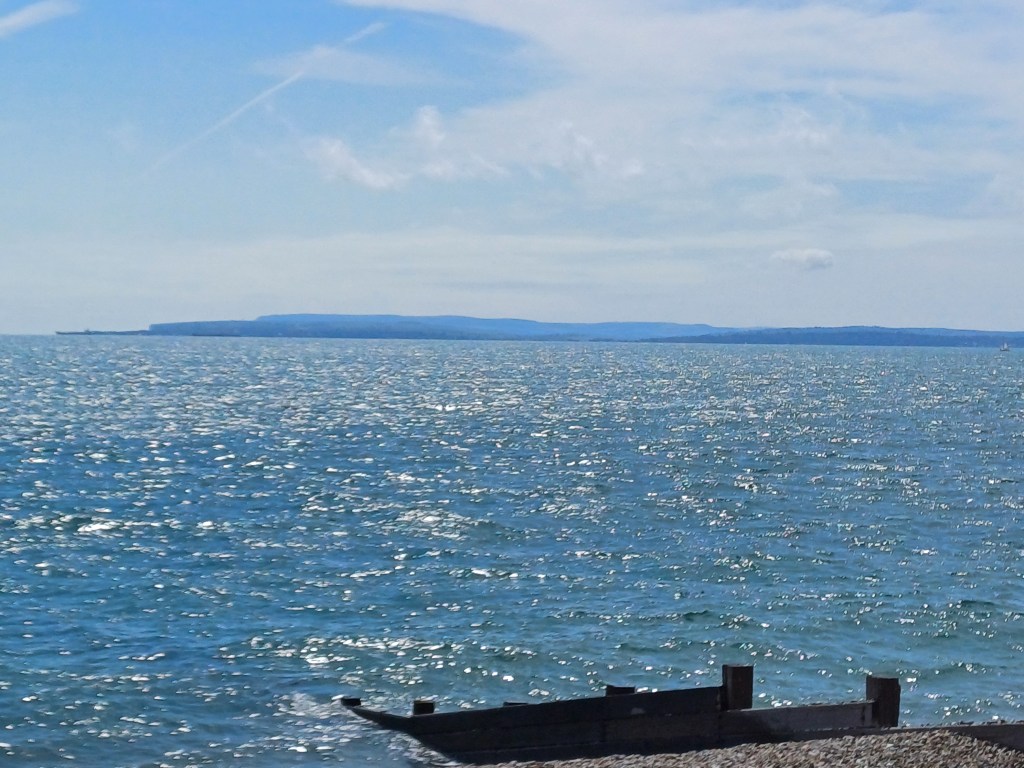

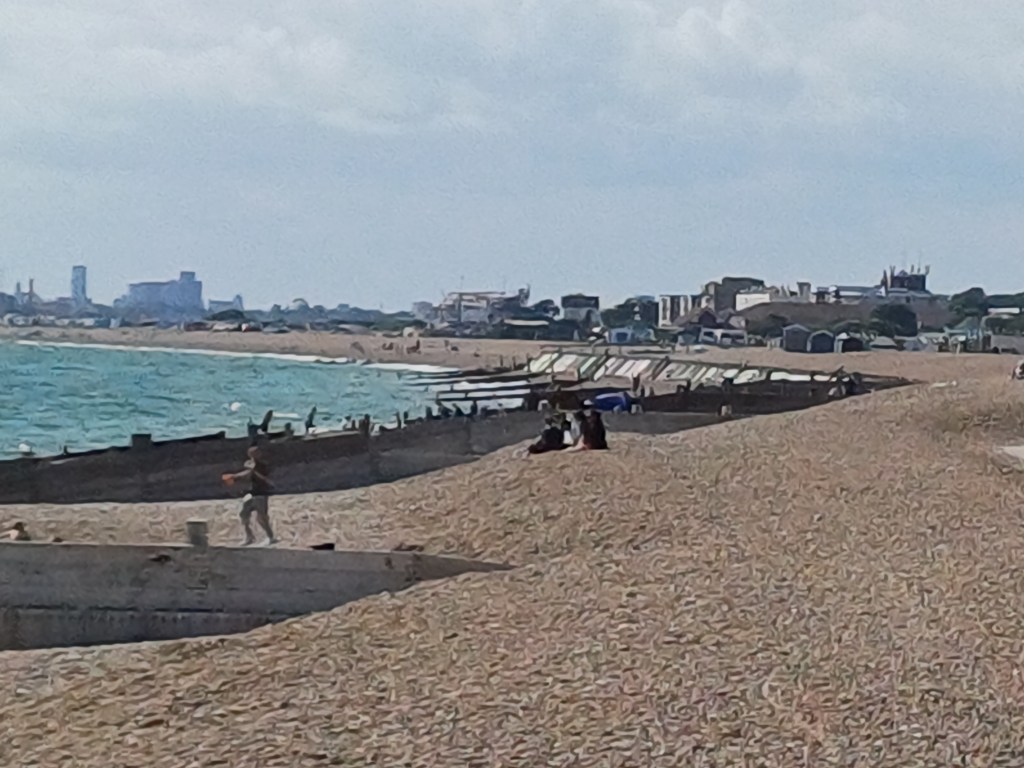
I had an ice-cream and then sat on the beach for a while, listening to the sound of the waves on the stones and the wind. When I lie down, I’m still warm. I listen to the waves over the pebbles and breathe in the salty sea air and feel glad that I’m alive.
Of course, I had to put my feet in the sea. I hadn’t expected the afternoon to be so warm, otherwise I would have brought swimming shorts and a towel.
Just a quiet time on the beach.
 Eunuchorn
Leave a comment